Tuesday, August 24, 2021

A Very Candid Conversation with Kaylin Roberson


Kaylin Roberson (2020)


From a young age, Carolina native Kaylin Roberson loved playing music, but it wasn’t until she was fourteen when she found her own voice. At age nine, Kaylin was the victim of a brutal dog attack, which required facial reconstruction. After the accident, Kaylin used music as a way to heal and then ventured into songwriting. By the time she was in high school, she joined the Teen Nation Tour and visited high schools throughout the country to speak about bullying. In addition, she had toured with her band in the Carolinas where she played guitar and piano. Her first single in 2018, “Christmas Everyday,” was featured in a Christmas movie for the BET Her network . 

In 2019, Kaylin moved to Nashville to pursue a musical career. While in quarantine during the COVID-19 pandemic, Kaylin was busy writing songs in the pop country genre. Kaylin’s music speaks on several themes about love, hometown life, and moving to a city. In 2021, Kaylin released two singles, “Big Fish” and “When He’s Been Drinking,” with more to follow.

In this candid conversation, we cover the beginning of this promising young artist. We start with Kaylin’s childhood to her recent move to Nashville. We discuss her musical inspiration and her goals for her musical career.  I want to thank Nichole Peters-Good of Good Public Relations for setting up the interview, but mostly I want to thank Kaylin.

Jeff Cramer: So what got you interested in music?

KR: I actually started playing music when I was 14, and I started writing my own songs. My dad always kind of pushed me into music a little bit. He put me into piano lessons when I was six. That's kind of where it started. And, of course, I dreaded going to my lessons, but I'm really thankful that he put me in them because as I got older, I wanted to pick the piano back up and learn how to write my own songs on it.

Then, I formed a band in the Carolinas, and we started playing both North and South Carolina venues. It just kind of started from there, and it grew. I've been in Nashville for two years. And now I'm just really trying to become a better songwriter and put out quality music because I don't just want to be another voice in Nashville. I want to be a voice that people want to listen to.

JC: I understand that you had an accident when you were nine years old.

KR: Yes. When I was nine, I was attacked by a black Lab—it was actually a family dog. And he ended up ripping off the right half of my lip and splitting open the side of my eye. I had to go into surgery and get facial reconstruction and the whole nine yards. It took a toll on my family.

Going back to the question about what inspired me to get into music, and that incident honestly played a really big role in my music career.

After the accident, I was home for a couple weeks recovering and my dad was like, "I have to go to work. Here's a camera." He set it up and said, "Here's the Record button. Have fun." ’Cause he knew that I was always the kind of kid who could entertain myself. I was out of school, so I didn't see it as an issue, but I started just recording covers of who knows— KIDZ BOP or Hannah Montana, whatever you do when you're nine years old.

Later in high school, a company reached out to me and wanted me to join them on an anti-bullying tour. They're called the Teen Nation Tour. We went from California, to Texas, and my hometown, and we just talked to kids in schools about bullying. I always tried to preach self-confidence, because in my mind, if you don't let yourself get bullied, you won't be. So, I try to preach just loving yourself for who you are, things happen, and that's part of my story.

I actually got homeschooled after that. I missed too much school because I was going to other schools to talk to kids about bullying. One thing led to another, and I think it helped the transition of me moving to Nashville go really easy. I mean, I had already given up so much. I'd given up public school and things like that. So it made it easier and just kept inspiring me to want to do the music thing. And now I'm here.

JC: Your first single was a Christmas song “Christmas Everyday.”

KR: Yes. Actually, it's really funny. I had a drummer back home in the Carolinas, and he knew a lot of people in music. From him, I got this opportunity to write a song for a Christmas movie. I thought it was really cool. So we wrote a couple of Christmas songs together, and it actually got put in the movie, and it plays on BET Her, the female one, every Christmas. So it's really funny that you said that because I do have Christmas songs out. A lot of people don't know that. [To listen to “Christmas Everyday,” click here.]

JC: There’s another Christmas tune, “Grandma Got Lit.” 

KR: Oh my goodness. Yes.

JC: Let's talk about that one.

KR: That was part of the Christmas songs we did. It wasn't in the movie, but they wanted to have an extra bonus track thing that was fun. That was probably the most fun I've had in a long time for sure. And my grandma loved it. [To listen to “Grandma Got Lit,” click here.]


“Grandma Got Lit” cover (2020)

JC: During the pandemic of 2020, you wrote a good deal of songs.

KR: Yes, I definitely did. At first, going from in person to using Zoom didn't mesh with me well. I was like, “No, I'm going to wait this out.” I think a lot of people thought that about the whole COVID situation anyways—they thought that it would just blow over and we wouldn't have to change our entire lives around it. But we did end up having to do that. So after a month or two of just being like, “Oh, I'll wait it out,” I was like, “I'm going crazy. I have to keep writing.” So I started writing songs. Luckily, now the world's open again, but yeah, it was a lot of songwriting for sure.

JC: You were living in Nashville in 2020, and the first song you wrote and released was “Out of My Town,” where you talk about how your hometown can never be replaced no matter what happens to it.


“Out of My Town” cover


KR: An Uber driver inspired that idea because he was telling me all about how Nashville is his home and a lot of newbies like me keep coming in. Not that he has anything against it, but it just made me really reflect on my hometown and how it would feel when I would go back and little things that happened. Actually, part of growing up is moving away from your hometown. But I also met a lot of people in Nashville who made me realize that this is their hometown. The city is tearing down their homes and rebuilding them, and doing all that really changed a lot of this town. But to them, it's still their home.

So I wanted to capture that with my buddies, Clayton Mann and Bryce Mauldin. They helped me write that song. I'm glad that it was my first release. [To hear “Out of my Town,” click here.]

JC: Then you get into falling in love and wanting to know someone better with your single “Know You Like That.”

KR: That one is super fun. Actually, I think it might be my most streamed song. I just wanted to write something fun and upbeat, but it's harder to write those types of songs, like love songs that are happy. It sounds bad, but it's a lot easier when you're upset to feel inspired to write about a breakup or something like that. [To listen to “Know You Like That,” click here.]

JC: Then we touch the theme of breaking up in your Break Up Proof EP. There are three songs on the EP, but they all carry the same theme. 

KR: It does. I really wanted to tell a story with that EP. Obviously, you can tell I'm glad you noticed. I kind of wanted to tell the story of someone who fell in love because it starts with the “I See You” [To listen to “I See You,” click here]  and then the breakup happens and that's “Break Up Proof.” And then “Right About Now” is kind of like the phase of getting to know somebody new again and having to deal with the moving on and stuff like that.

JC: I thought it was a good choice to have piano as the only instrument for “Break Up Proof.”

KR: I really wanted “Break Up Proof” to be stripped down. Who knows, maybe I'll rerecord it later and do some production on it. But I wanted to showcase the lyrics of it. [To listen to “Break Up Proof,” click here.]


Break Up Proof EP cover (2020)

JC: Then there’s “Right About Now.” In the song, the narrator is still remembering her past lover, but the lyrics also say, “I should be over you right about now.” It's like the lyrics for “Break Up Proof” and “Right About Now” could be narrated by the same person.

KR: I really wanted to just capture that moment of trying to get to know somebody new and it was kind of hard to do. Because when you put too many “yous” and “he” and all that in a song it's like, “Who are you talking about? Who is she with?” But I just wanted to really capture moving on and getting to know someone new is always really hard because it feels like you're pressing restart. You have to come up with new inside jokes, and you almost become like a new person in that way. [To listen to “Right About Now,” click here.]

JC: I wonder if the single “Big Fish” has something to do with your move from North Carolina to Nashville because the lyrics are about thinking you’re big but once you go to another town, you're not as big as you think you are.


“Big Fish” cover 2021

KR: Yeah. What I love about that song is it just started when my mom has said growing up about just people in our town that thought that they were on their high horse all the time. But I experienced it as well on the other side of things. Being the big fish, then coming here realizing there's a lot of other people doing the same thing as me, which is very comforting and also really just inspiring.

And it makes you want to work harder. But yeah, I mean, people can take it either way they want to. And what's cool about it is you can take it as maybe there's someone you know that needs to hear that song. Or maybe you've been there, and you're like “Oh, yeah, people told me that and look where I'm at now.”[To listen to “Big Fish,” please click here.]

JC: We're slowly starting to reopen. You've put a bunch of songs together. What's your plans now for 2021? 

KR: So I actually have two more singles coming out. I have one that came out on August 20 called “When He's Been Drinking,” and I'm super excited about it [To hear “When He’s Been Drinking,” click here.]. Then sometime in November I'm going to release another song with the vibe like “Break Up Proof.” People seem to love my sad-girl country songs.

JC: Any chance you be going taking the singles out on the road?

KR: I've been playing a lot around Nashville. I mostly do a lot of songwriter rounds. Every now and then I play on Broadway. [Note: In this context, Broadway is referring to the major thoroughfare in the downtown area in Nashville, Tennessee.] I opened up for Chris Janson recently. I think I'm playing one festival so far in October, but I don't have any major things planned yet. Right now my big focus is getting music out there, and I'm completely independent. So the goal is to just keep building my team up and hopefully one day there will be some one who can help me and my band figure out how to get on the road more because I love doing that. So, hopefully we get back to it soon. But right now, you can catch me playing in Nashville for sure.

Kaylin Roberson (June 2020)


Sunday, June 27, 2021

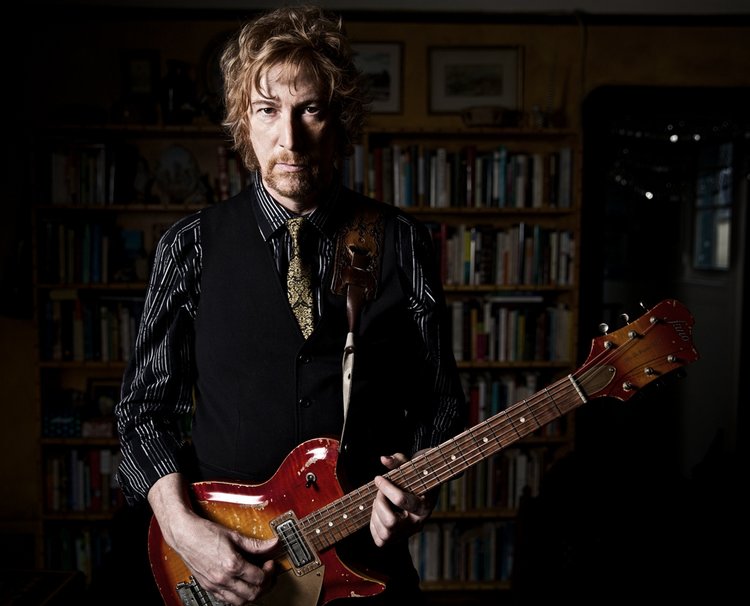
A Very Candid Conversation with Lyle Workman


Lyle Workman (year unknown)


Lyle Workman has had an extensive musical career that stems from the mid-80s to the present. He first got his start playing guitar with the rock band Bourgeois Tagg in 1986. Todd Rundgren produced their album Yoyo in 1987. Their 1987 single “I Don’t Mind At All,” which Lyle co-wrote with the band’s founder, Brent Bourgeois, hit the Top 40. After Bourgeois Tagg broke up, Lyle became a session musician, both in the studio and live performances. Some of the musicians Lyle played with include Sting, Sheryl Crow, Beck, Shakira, Norah Jones, Todd Rundgren, Frank Black, and many others.

Lyle’s résumé doesn’t end there. He has composed the film score and/or produced the music for many well-known Hollywood comedies such as Superbad, The 40-Year-Old Virgin, Forgetting Sarah Marshall and several others. In addition to films, he has written the music for TV shows such as Love and Good Girls.

Yet despite Lyle’s busy schedule, he has found time to release four instrumental solo albums since 1996. He released his latest solo album Uncommon Measures in 2021. Uncommon Measures is a jazz fusion album that features orchestration by John Ashton Thomas, who was the orchestrator for the Black Panther and Captain Marvel films. Guitar legend Steve Vai has praised Lyle’s album.

In this candid conversation, we cover Lyle’s extensive career beginning with Bourgeois Tagg, his session work, his film and TV work, and Uncommon Measures. I want to thank Billy James of Glass Onyon PR for setting up the interview, but most of all, I want to thank Lyle.

Jeff Cramer:  So, what got you interested in music?

Lyle Workman:  The Beatles. My dad played guitar as well, so I wanted to do what my dad did, but I also wanted to do what John and George of the Beatles did. He bought me a little guitar and taught me the basic open chords. Then I had a record player in my room, and I would play the Beatles’ music and play my guitar simultaneously. I was hitting on chords that they were using and, in the process, teaching myself how to play Beatles songs. That process pretty much just continued for the rest of my life [laughs] learning things from records. As my tastes expanded and I grew up, so did my taste in music and learned a lot by ear. I went to a college and studied music, and I still am.

JC:  How did you wind up playing with Bourgeois Tagg?

LW: Just from playing with local bands and club bands in the Bay Area. That's how I met the central songwriters of Bourgeois Tagg—Brent Bourgeois and Larry Tagg. They saw me, I saw them. We were playing in different bands. That’s how that started.


Bourgeois Tagg (Lyle, far right, year unknown)

JC: What’s interesting about the video for Bourgeois Tagg’s single, “I Don’t Mind,” is that it’s directed by future film director David Fincher.

LW: This is the first time anyone’s ever mentioned this. [To watch the “I Don’t Mind” video, click here.]

JC: Oh.

LW: Yeah, at the time, David Fincher was in his mid-twenties. We were all young. He was a pretty big music video producer at the time. I think he had directed music videos for Sting and Madonna. But yeah, I remember working with him. He was great, really fun.

JC: Did you have any idea that he would be doing movies later on?

LW: No. Neither him nor me. [laughs]

JC: Also Todd Rundgren produced Bourgeois Tagg. You would later work with him. Talk about how that went from Bourgeois Tagg to eventually working with him.

LW: Yeah, it was a big thrill for us to have him produce our record. Shortly afterwards, our band disbanded.

Several of us went on to play, tour, and record with Todd, which was a huge treat. I was a gigantic fan and continue to be.

 
Lyle in Todd Rundgren’s band (1990)

JC: And now Todd’s been inducted into Rock & Roll Hall of Fame in 2021.

LW: Yeah. It's about freaking time. It's kind of a no-brainer. But, yeah, I mean if there's anyone who belongs there, he sure does for all he's done in music.[To hear a live performance of Lyle and Todd
Rundgren playing “Parallel Lines” click here.]

JC: After Todd, you worked with Jellyfish.

LW: Jellyfish was something that happened right afterwards.I recorded a record with them called Spilt Milk [1993],  which is a fantastic record.[To hear Jellyfish perform “Glutton of Sympathy,” click here.] Then I went on the road with an artist named Jude Cole, who had a hit single out at the time called “Start the Car.” That was one tour. Then I did a more substantial tour with Frank Black..

JC: I understand that you worked with Frank a lot because you even arranged some of his songs in addition to playing with him live.

LW: It was about five years of touring and recording with Frank. It was a great gig, personally and musically, yielding several records that I’m very proud of being a part of [To hear Lyle perform with Frank Black performing “Headache” live, click here.] This went on from the early to the late ’90s. At that time, I moved to Los Angeles and I've been here ever since.

JC: Around that time, I guess you also worked with Beck.

LW: Yes. That was another fantastic experience. It was almost three years of touring for his Midnite Vultures album which was a lot of fun. [To hear Lyle perform with Beck performing “Debra” live, click here.]

JC: Then you worked with Lazlo Bane.

LW: [laughs] Yeah, a good friend of mine, Chad Fischer, that’s his band. We're very good friends. Also, another composer. [To hear “Buttercup,” a song that Lyle wrote with Chad, click here.]

JC: You've performed live a lot of with artists. You had to cover a lot of other guitarist’s parts. How did feel playing guitar parts that were not originally yours?

LW: Well, you know, when you work with a number of artists and number of bands, you learn how to be a chameleon. You learn how to play other people's music and guitar parts if that's part of the job. It's part and parcel of being a session musician. It's great in that it helps widen your scope of interpretation of music when you learn other people's material.

JC: Is there anyone who stands out during your session musician time?

LW: Well, they all stand out for very different reasons. I would have to list a few of them. You know, Todd Rundgren was a huge influence on me before I started working in his band and recording with him. The most substantial are Todd Rundgren, Beck, Sting, and Frank Black. They all had a huge influence on my music and my versatility. You know, they don't sound anything alike and through their vast differences, important to my growth as a musician. It was and still is rewarding to work with such a wide range of artists.

JC: So how did you go from being a session player to writing music for movies?

LW: It was through session work. I was working with a film composer named Ed Shearmur, and his wife was an executive at Universal Pictures. Harry Garfield, who was the executive Vice President of Music at Universal, needed a guitar player for a personal project. I gave him a CD of some of my music to take with him, and that's how I ended up with Judd Apatow. [Judd Apatow is the director of Knocked Up and The 40-Year-Old-Virgin.] It was through that connection. Judd had his own take on comedy, his own formula—his own brand of heartfelt comedies—and it was great being part of that scene when his films were exploding, it was very fortuitous to be in his team.

JC: What's the difference for you musically as being a session player as opposed to scoring the music?

LW: I’m not writing the music as a session player. I'm not hiring musicians, working budgets, working with directors, film studios, and music contractors. It's a big responsibility being a composer as opposed to being a session musician where you essentially show up on the day. Most often you’re hearing the music at the beginning of the session and by the end of the day, you’re done. So, it’s a gigantic difference. Maybe the same difference as farming to being a chef. [laughs] It's somewhat related, but it's a different aspect. Again, it's a much bigger responsibility being a composer, I feel.

JC: Yeah, okay. Is there any particular film score that you've worked with that you're super proud of?

LW: Super proud of Superbad.

JC: Okay. That one particularly?

LW: It was an R&B and funk-based score, and Sony was okay with financing and bringing the architects of that music into the fold. So, we flew out Bootsy Collins, Catfish Collins, Clyde Stubblefield, Jabo Starks, and Bernie Worrell. That kind of legitimacy in that genre was brought to my music. [To hear Lyle’s music for Superbad, click here.]

JC: Also, I understand you've worked as a producer as well.

LW:  Yes, but to be precise I produced the original score for soundtrack, I was not a producer of the film. My largest scale music production was for the film Get Him to the Greek with Russell Brand and Jonah Hill. Twenty-something songs that had to be written, recorded and produced for the soundtrack. We whittled down our favorite ones to be in the movie and then which also appear on the soundtrack CD. That was great fun. [To watch the “African Child” video from Get Him to the Greek, click here.]

JC: What is the difference between producing a soundtrack as opposed to composing it?

LW: Well, there is overlapping in the two. Being a composer, I’m automatically the producer of the music. When I’m producing a soundtrack, I’ll bring in musicians and follow through to mixing – that’s the same job between the two hats.

JC: You released Uncommon Measures in 2021. Your last solo album was released in 2009. Why did this one come out much later?

LW: The reason it came out much later was due to my workload composing over the last decade. To add to that, it takes a long time to make a record of this scope; just the preparation and planning of orchestral recording alone took a good amount of time. I worked on the record when time permitted, within a four-year period. That's why it took so long.

JC: Uncommon Measures is a jazz fusion album. That’s very different from what you’ve played on before. How did you decide on jazz fusion?

LW: I think there's a thread of that kind of music on all of my solo records. For this record, jazz fusion only applies to certain aspects, whereas other some are neither jazz nor fusion. There are elements of rock, classical, soundtrack, prog rock, funk. All the tracks are instrumental and feature high levels of musicianship. This record was an opportunity to express various sides of who I am as a musician.

JC: You brought in John Ashton Thomas who had done the music orchestrating for Captain Marvel and Black Panther.

LW: Oh, John’s an orchestrator, arranger, conductor and composer. A brilliant musician all around. We've worked together within thirteen years on some of my movies. We’re kindred spirits in music, loving jazz, progressive rock, the music of our formative years. I knew I wanted him to be involved because he's such a great orchestrator and arranger. It’s a real joy and for me, each time a learning experience in the orchestral domain.

JC: Now, had you used an orchestra on your other solo albums?

LW: Yes, on my previous record I had some strings, miscellaneous woodwinds and brass, but recorded in piecemeal fashion. hadn’t booked a studio with a large orchestra for my own project, although I have several times for my film scores.


Orchestra playing on Uncommon Measures (2021)

JC:Is there a particular favorite for Uncommon Measures?

LW: I like them all quite a bit, but I would say that “North Star” is akin to the “greatest hit” of the entire record because it features the orchestra, has fantastic solos with drums, violin and guitar. It has a section that’s purely orchestral and dynamic. That piece alone is a pretty full meal. [To watch the “North Star” video click here.]

JC: Have you ever toured behind any of your solo albums, or are you planning to tour behind this one, Uncommon Measures?

LW: I haven't toured any of my music primarily because I've been busy working for other people. That has been my primary focus in making a living, and quite frankly how I was able to self-fund such a record as Uncommon Measures. It was not done on the cheap and was a huge expense out of pocket. Additionally, it's very to expensive tour without the support of a label. I've got a family and need to be responsible and keep the money coming in. So, at least for the time being going on the road—especially with an orchestra—is not in the works.

All that said, if an orchestra in Europe would finance to have me over to do some shows, that would work.

JC: In addition to recording Uncommon Measures, what else have you been doing the pandemic?

LW: I worked through the whole pandemic. I write music for Facebook, which is another job that I have. They have a program called "Facebook Sound Collection."

JC:  Oh really?

LW: It's essentially what they call "library music." It’s license free music for Facebook and Instagram users to accompany the videos they post. It’s a free service.  The music can be downloaded from the Facebook Sound Collection web site.  I’m one of many writers for the program, and was writing music for it during the pandemic.

Also last year, I released twelve records on iTunes, Apple Music, Spotify, etc. They’re my favorite collections of songs written for the Facebook Sound Collection, in a number of styles, also all instrumental. They're available for streaming and downloading on all the popular formats. 

JC: It’s quite a musical journey you had. You first started with Bourgeois Tagg, then a session musician, then you're a film composer, then a soundtrack producer and in addition you do these instrumental solo records. It's quite a lot of destinations along the way. How would you describe the whole journey?

LW: Yeah, it's been a physical manifestation of all my interests along the way. I feel very lucky to have had these experiences in such a broad arena. We all put our energy into the areas of life we're most passionate about .My musical interests just happen to vary widely and so it was natural for me to sidestep into different genres with different kinds of artists and then into the world of composing. The key is to say “yes” to any opportunity, even if it feels like a stretch. For me, that’s what led to other projects, and those to other projects. Through dedication, persistence, and perseverance through good times and bad, I was able to sustain a career over the long haul in this ever changing music business, and feel very blessed that things worked out the way they did. 

Tuesday, June 22, 2021

A Very Candid Conversation With Leslie Hunt


Leslie Hunt (year unknown)


On the music reality show American Idol, most of the contestants sing pop like Kelly Clarkson, or country like Carrie Underwood. Leslie Hunt was a completely different contestant. In 2007, Leslie was a semifinalist on season 6 of American Idol, and would stay in the semi-finals for two week. On her first week, she covered Aretha Franklin’s “Natural Woman.” On the second week, she covered Nina Simone’s “Feeling Good.” At the end of her performance, she was “scat singing,” which is an improvised way of soloing using various nonsense sounds and syllables. Her scatting didn’t warm the hearts of Randy Jackson and Simon Cowell, and she was voted off the show shortly after. Her performance of “Feeling Good” and the reactions by the judges can be seen here.

Leslie may have been done with American Idol, but she was not done with her music career. In 2009, she recorded a solo album, Your Hair Is On Fire, and then joined District 97 as their lead singer. District 97 was unlike anything that Leslie had done before. They are an unusual music mixture of metal and progressive rock. (An example of the musical style of District 97 can be heard here in the video for “Snow Country.”) District 97 have recorded six albums, starting with Hybrid Child (2010) and most recently with Screenplay(2021). Their music has received favorable mentions from legends in the progressive “prog” rock genre as John Wetton (King Crimson and Asia) and Bill Bruford (Yes).

In addition to fronting District 97, Leslie has decided to make two solo EPs in 2021. The first EP, Ascend, will be released on June 25, and the second and EP, Descend, will be released in September. Each EP will have seven songs and both will contain new music genres for Leslie to explore.

In this candid conversation, we will cover Leslie’s musical journey from American Idol to District 97 and her current solo endeavors. I want to think Billy James from Glass Onyon PR for setting up this interview with Leslie, but most of all, I want to thank Leslie.

Jeff Cramer: So what got you interested in music?

Leslie Hunt: Well, I was raised in a very musical family. Both of my parents played music. They performed it, rehearsed it, or taught it in some capacity every day. I loved to sing, and I started playing piano at the age of four. Music was just a huge part of my upbringing. All of my aunts and uncles, and cousins, and grandparents on both sides played music. It was just a super musical environment. I basically had no choice.

JC: When you were on American Idol, you mentioned that your grandfather was a particular influence. How was he an influence on you?

LH: Yeah. Well, I grew up in the same neighborhood as my grandparents, so I was able to walk over to their house quite easily. And my grandpa was very supportive of my songs. When I first became a songwriter, he loved to listen to them and analyze the lyrics. He would say. “Oh, play that part again.” With grandparents, it’s usually a less complicated relationship than with your own parents, so in a lot of ways that was probably the easiest adult relationship that I’d had at that time. It was sad to lose him so early in my career because I felt he would really have gotten a kick out of everything I’m doing now. 

JC: When did you discover that you could write songs?

LH: I think the first complete song with words and instrumentation was when I was fourteen—that was like when I finished a song. I used to write little mini songs, like silly songs all the time. The first song of mine I performed with my friends when I was in a band in high school. The band was like, “Well, you don’t need to be writing songs for this band,” and I’m like, “Oh yeah. All right. Challenge accepted.” And yeah, and it just hasn’t stopped.

JC: Okay. I understand before American Idol, you actually teamed up with Jim Peterik (performer and songwriter for “Eye of the Tiger” by Survivor, and “Vehicle” by the Ides of March). 

LH: Jim Peterik took me under his wing when I was fifteen years old, and he started mentoring me as a songwriter. He helped me shaped my songs and record them. We still work together, actually. He helped me a lot when I had a development deal with Sony, which didn’t end up going through, but he definitely was a big help.

JC: I understand you had a health scare shortly before you went on American Idol?

LH: Yeah. That was actually a big reason why I even did American Idol in the first place, because I realized how I almost died at the drop of a hat. I ended up getting the Yellow Fever vaccination to go to Brazil. We had plans to be in the Amazon rainforest, so I had to get the Yellow Fever vaccination. But I had a very adverse reaction to it, and basically all of my organs started to fail, and I was more or less unconscious for roughly ten days. My parents came to say goodbye to me, and I ended up pulling through. The doctors said that if I lived, I would be basically a vegetable and I would suffer severe brain damage. But none of those things ended up happening, and I’m completely unscathed. So I was thinking, “I’d better do something big—so yeah, that’s pretty scary.” But I don’t remember any of it. I just remember waking up and feeling pretty much okay.

JC: Okay. How did you become involved with American Idol? 

LH: Well, I auditioned. I was one of the 104,000 people to audition in Season 6. I was a singer and had always been, and I thought that might be a key thing to do. I’d never seen the show, so I auditioned without any knowledge of what the show was like. It probably would have been helpful for me to know a little more about it going into it . . . but yeah. I ended up making it to the top twenty, so I was like a top ten female finalist. But overall, I was a semifinalist.

Leslie on American Idol (2007) 

JC: Okay, I was about to ask if you had seen American Idol before you got on the show since you performed both Aretha Franklin and Nina Simone, both who aren’t usually covered by American Idol contestants.

LH: I’d previously just been to music school, and I’d been performing in different jazz clubs around Chicago. I played piano and sang exclusively. I didn’t really like just standing and singing. I needed to be playing piano at the same time. Actually, that’s how I entered American Idol too. So standing there and singing in American Idol felt very strange. I strongly would have preferred to have my piano in front of me. I did Nina’s “Feeling Good” pretty often. And I just kind of mimicked Nina Simone’s scat, which did not translate well, so that was a pretty hilarious unfortunate choice. I identified as kind of a soulful singer, but in hindsight, I guess I wasn’t really developed yet.  

JC: You would scat again over the closing credits of American Idol.

LH: I think I actually started to swear, and they cut me out before I got there. I walked off the stage, and I’m like, “Oh my God, what did I just do? What did I just say?” It was a horrible thing to ask a contestant to do in the first place, let alone something that’s so kooky. To have credits rolling when you’re like expected to do this big scat. I’m like, “Oh no, this is horrible.” So I was going to sing about how horrible this is.

JC: You scatted, “Why did I decide to scat? America doesn’t care for jazz.” You maintained a good sense of humor after what had just happened.

LH: Yep. That’s me. I’ll spin the worst things. Try to make it funny somehow. It’s a coping skill.

JC: You started your solo career before joining District 97.  I heard “All The Way” and “American Dream Man.” Those songs don’t sound like jazz to me.

LH: Now those are pretty pop. The first album that I made after American Idol was decidedly kind of all over the place in genre. You know, it had one jazz piece on the album. Jazz drummer Vinnie Colaiuta is on the whole record. There was like a slight jazz influence. You know, complex harmonies and things like slightly unexpected turns but sonically it hits the ear as more of a pop record for sure. [To see Leslie perform “American Dream Man,” click here.]


Your Hair is on Fire album cover (2009)


JC: After hearing your solo singles and American Idol stuff, I don’t think anybody could have predicted your next turn. You became the singer of metal prog [progressive rock] band District 97. How did that all come about?

LH: I was in music school, and that was how I met the bulk of the band members, at the time at least. We all went to school together. When I got off American Idol and got back into town, Jonathan [Schang], the drummer, asked me to open up for District 97 as a solo artist. So I did, and I stuck around to check out their set and they didn’t have a singer yet. I couldn’t believe what I was hearing. I was blown away.

My sister had just passed away and she was a big fan of metal. District 97 had enough of a metal kind of quality in it that I just felt like I needed to kind of create an alter ego for her. For her kind of rebellious energy, and anger, and just a way to kind of get some of those feelings out. District 97 has been a wonderful outlet ever since. I’ve been in it for almost twelve, thirteen years or something.

JC: District 97 is metal, but it also has a prog element to it as well.

LH: My dad was a free jazz drummer. [Free jazz is an improvised style of jazz characterized by the absence of set chord patterns or time patterns.] Prog’s sort of like free jazz. It begins with a very bizarre, complex melodic odd kind of time signature line, which is really unconventional but complicated. It’s almost impossible to dance to.


District 97 in 2018

I had that grooming already and had that sensibility and appreciation for that. So, I guess the avant-garde didn’t feel like a stretch thing. Although, what I had been doing at that point wasn’t along those lines, but I just felt like I was able to fit right in and come up with melodies and words that would make it a little more memorable. I brought some of my pop background to those complex songs, and I think it worked out pretty well.

JC: I do detect a minor bit of jazz in “Forest Fire” when you’re doing the verses. [To hear “Forest Fire,” click here.]

LH: Oh, yeah. [Hums the “Forest Fire” melody.] I hear that. It’s in there somewhere.

JC: Now District 97 was getting attention from some prog legends. First, there was John Wetton. [John Wetton has played bass and vocals with King Crimson and Asia.]

LH: We did multiple tours with John Wetton. He really liked our music. John and I got along as singers and front men. We talked about a lot in common, and he was just such a generous, humble, appreciative person. He really opened up a lot of doors for us with his audience. I think there were three times when we did a set of our own music, and then he joined us on one song and then we played a bunch of classics like King Crimson.

JC: Did you cover any Asia tunes?  

LH: You know, we were about to. We didn’t end up getting there. Unfortunately, John got sick and we had to cancel it. So we didn’t have a chance to perform the Asia songs with him, but that was the plan. I think we had planned to do “Heat of the Moment.” 

JC: Another prog legend, Bill Bruford, who was the drummer for Yes, has praised District 97.

LH: Bill Bruford is a big, big supporter. He mentioned us in Rolling Stone as a younger band to kind of look out for. That was really cool. A younger band that’s been at it for a long time, I might add. I’ve never met Bill myself, but he’s very supportive of us.

JC: I was hearing the recent album Screenplay, and you did some covers. What’s not unusual is that you covered Yes’ “Long Distance Runaround,” but you also did “Walking On Sunshine” which is not prog or metal.

LH: Right, I know. I was working with a company called Music Dealers, and they asked me to record a version of “Walking On Sunshine.” Neil Kernon, who used to produce Hall & Oates, produced that track at Wax Trax in Chicago. District 97 had it in the vault. Jonathan, our drummer, runs the band and he keeps stuff around for special things like this. So we had content and we piled it all together. You  know, it doesn’t all match, but it’s all us. It’s all cool. [To hear District 97’s “Walking on Sunshine,” click here.]

JC: So what made you decide to go back into your solo career? It’s been a while since your last solo album.

LH: Yeah, it sure has. I just got really inspired again. My boyfriend and I have been together for almost two and a half years. I got very inspired when I started dating him. I just felt like I wanted to write songs again. I was writing some love songs, but I’ve also since written songs around the big George Floyd protests across the whole world. I’ve also written songs about the quarantine and the effects it has had on humanity. My boyfriend kind of helped open the floodgates.

JC: I’ve listened to the Ascend album. I understand that this is a two-part series. On June 25, the Ascend album will be released. But in September 2021, Descend, a second album, will be released.

LH:  Both albums are stylistically quite different. They sort of represent the world pre-pandemic and post-pandemic, but they are . . . you know, they feel like they could become one body of work. Like maybe go into a final double issue or something like that to kind of combine the two.

Ascend has kind of a Nashville feeling to it at times.


Ascend album cover (2021) 

JC: I noticed some country elements in one of the songs from Ascend, “Down the Road.” I hadn’t heard any previous country themes from you.

LH: “Down the Road” sounds like a driving song, like watching the trees go by. Kind of like writing a letter to my sister who passed. Kind of catching her up with everything that she’s missed.

JC: One interesting choice off Ascend is “Wolf Cried Boy.” That’s an interesting title choice. How did that come about?

LH: So I kind of slipped the metaphor of the boy who cried wolf. In this song, I’m kind of depicting somebody as the wolf. Basically, the girl has a lot of boyfriends and keeps trying to tell everybody, “This boyfriend is the best one yet. No, this one is the best one yet.” Kind of like you just had a long line of relationships when you start to kind of feel embarrassed after a while. You can imagine that people are gossiping about you. So yeah, it’s just sort of that. I don’t know. It’s a song about fear of judgment, or mild paranoia, I guess. [To hear an acoustic take on “Wolf Cried Boy,” click here.]

JC: Are there any other tracks from Ascend you want to talk about?

LH: Well, I’ve got some videos coming out from Ascend. There’s going to be a really, really fun stage video for “There You Are.” [To watch the video for “There You Are,” click here.] And then there’s this really cool video coming out for “Right Here.” When I wrote that song, I instantly had a visual of what I thought the video would be, and I think it did a good job with my vision. It’s like visualizing carrying this giant heart around the city of Chicago and trying to fit it into my car. Crossing streets just carrying this huge heart. And it’s heavy and it’s windy out, and it’s really difficult. I hope other people will like that one and think it’s pretty cool.

JC: Talk to me about Descend.

LH: I’m actually working on Descend, and my producer is in town right now. I’m taking a break from recording to talk to you right now.

JC: Really?

LH: And then I’ll go right back to work once we’re done. Descend has got some funk and soul quality to it, but it’s still my songwriting. It’s still my voice.

JC: And soul funk is yet another genre you have chosen to work on. Do you decide on genres before working on them?

LH: I don’t think so. I’m just realizing after the fact that they are kind of going along those lines, but it’s not something I deliberately did. I don’t know. I don’t think it’s something I decided that I was going to try to do. I think it just happened.

I listen to a huge variety of genres. My main income source as a musician is that I lead an event band. We do a lot of weddings and stuff like that, and so I listen to just tons of different stuff because of that. And also just with District 97, I feel like I’m exposed to a huge variety all the time.

JC: What plans do you have with either District 97 or your solo career? Do you have any touring plans in the future?

LH: Yeah, we do. District 97 is planning a tour at the end of October to go down South maybe. We’re going to be in Florida and those surrounding areas. And then I am trying to line up some release shows for both Ascend and Descend, respectively. Yeah, so that’s kind of what I’m working on. I’m still trying to finalize some of the details to see what I’m going to be able to pull off. You know, pretty much everyone I know is vaccinated, but some of their standards are different from what they’re willing to do. So it’s always an adventure at this point still for music, but the future’s looking pretty good. And we’re going to be on the cruise again.

JC: The Yes cruise?

LH: Yes. Yeah, we’re going on the next one.

JC: It’s been quite a music journey. First, you started with American Idol, then District 97, and now you’re back on your solo career.

LH: Yeah, I think what really shaped my direction was my affinity for songwriting. I’m always taking a thing of beauty and making it more beautiful. I think that’s how I’ve always kind of dealt with life and also try to help those around me. My sister kind of had a troubled time of this thing called life, and I wrote a lot of songs to hopefully inspire her to see things in a new way. When I realized that I could really affect people and help them see things in a way that I found helpful, that’s really what did it for me. Just the outreach of it. I wanted to be a therapist, honestly, but then I started writing songs, and I would give a tape to a bunch of people, and they would all tell me how much my songs helped them. I was like, “Okay, this is it. I love this.” Honestly, performing is a huge part of my identity, and it just really feels like I get to be my whole self. I need the performance, and I need the songwriting and the singing.

Sunday, February 28, 2021

A Very Candid Conversation with Demitri Lerios


Demitri Lerios had music ingrained in him since he was born. His father Cory Lerios was a member of soft rock band Pablo Cruise. When Demitri was nine, he started playing drums. His brother Michael played guitar, and eventually they formed a band together. That band would not last, so they formed a new band called Fox Wilde. The name “Fox Wilde” came from an alter-ego concept that Demitri had come up with. Demitri had thought about this calm, ultra-confident person named Fox Wilde. In addition to drums, Demitri sings and plays guitar, bass, and piano They have a wide music range that goes from dance pop to arena rock. 

Demitri and Michael wrote and produced all of their music for Fox Wilde, starting in 2017. Their music caught immediate attention. People magazine did a feature on them in 2017. Throughout 2018 to 2020, before the COVID lockdown, Fox Wilde did a lot of concert shows. In addition, they starting writing background music for TV, including a documentary by Demi Lovato called Simply Complicated.

During the COVID pandemic, the Lerios brothers focused on writing songs for a new album. In 2021, Fox Wilde focused on material for their upcoming debut EP Killer. In addition, they plan to record another EP Desire.  Both EPs are material that will come together for a full-length album called A Psycho Killer with Desire, which will be released at the end of 2021. Demitri has suffered from alopecia since he was sixteen years old, and he has come to terms with it recently. His struggle and resolve with alopecia will be reflected in the upcoming music.

In this candid conversation, we cover the beginning of Demitri’s musical career, his past and current work with Fox Wilde, writing music for the Demi Lovato documentary, and his struggle and resolve with alopecia. I want to thank Nichole Peters-Good  of Jensen Communications for setting this interview up, but mainly I want to thank Demitri.

Jeff Cramer: So what got you interested in music?

Demitri Lerios: I have always been around music. My family just always had music around, so I think naturally it's something you just gravitate to. When I was nine years old, I woke up one morning and told my dad I wanted to play the drums. He kind of looked at me and was like, “You don't know how to play the drums.”

So being a good dad he took me to a store, just to kind of get my drumming out. He was  just kind of like, “Oh, we'll go look at drums.” I guess I just sat down and I started playing. It was so natural. And my dad was like, “Okay, I guess we'll actually get you a drum set.”

So that started my musical journey. My older brother, Michael, who is also in Fox Wilde, played guitar. I think why I wanted to play drums was because he played guitar and I kind of wanted to hang out with him all the time. And he didn't want to hang out with his little brother, so I thought, “What does a guitar player need?” They need a drummer. That started our musical journey together and where we're at now. 

JC: Talk about the musical journey.

DL:  It stemmed from us just jamming. We started to love the same music and have the same aspirations. We just continued to grow together musically just by working together as a bunch. 

We originally started another band, which was a really great education for us. It started this fire in us to write and produce, which I had never done. I was just the drummer. And we were fortunate enough to be in the room with some really incredible writers and producers and just soaking up every single bit of information that we could about this business and everything. 

JC: Who were the incredible writers and producers you spoke with?

DL:  Right. Well, I was fifteen years old when I met Desmond Child [songwriter of major hits for Bon Jovi, Aerosmith, KISS, and Alice Cooper] for one. I was just kind of soaking things up. When you sit in the room with Desmond, you start to see the genius at work by how meticulous he is about a song title. Desmond said, “Do you have any titles?” We must have thrown out fifty titles and he said, “No, it needs to be better,” to every single one of them.

And he sat there until we actually got it. But the interesting thing about it is once we got the title, the song suddenly starts to write itself. It suddenly starts to just form because you can write. The title of the song is everything. 

Another mentor is Andreas Carlson, who also wrote NSYNC’s “Bye, Bye, Bye,” Backstreets Boys’ “I Want It That Way,” and tons of just awesome songs. We went to Sweden with Andreas and he took us to meet a lot of awesome songwriters. Everybody has a little bit of a different way of approaching a song, but there is this commonality between all these people where it's like, “Oh, the song title.” The song title must be really important if everybody keeps talking about it.

JC:  What happened with the original band and how did it become Fox Wilde?

DL: The initial band kind of fell apart, but then Fox Wilde was born. That was really the outlet I think we were looking for to put all of our creativity and put everything into it.

The last band was just a little bit more manufactured. It wasn't really us. We weren't really spearheading the operation. We were just a part of it. So Fox Wilde really became the outlet to discover what we could do creatively, and there were kind of no limits to it. 

JC:  How did the name Fox Wilde come about?

DL:  I was driving one day and I wanted to create a character that was the antithesis to what I was at the time. And I was like, “Who is this confident, daring character? What's his name?” I liked the name Fox for some reason, and I thought “Fox Wilde.” I don't know where Wilde came from with the e, but it just made sense.

JC:  Let's talk about the beginning of Fox Wilde with your first single “Soap.” 

“Soap” single by Fox Wilde

DL:  "Soap" was the perfect kind of beginning to what Fox Wilde could do. I think that really was a test if Michael and I can write songs.

So we sat down and it happened. It was really a test on how we could kind of just create a song from this funny title, “Soap.” How can we make that interesting? How do we be ironic with it?

And it just came together really quickly, actually. I put a track together. Michael came in and we started singing melodies. From there, we were bouncing off each other and there was the lyrics, “I want you close. I'm on you just like soap.” (To watch the video for “Soap,” please click here.)

 JC:  You really took the lesson of song titles from those great songwriters to heart. First there is “Soap.” Then the next interesting song title is “The Lonely Inn.” I’m thinking, “How exactly can an inn be lonely?”

“The Lonely Inn” single by Fox Wilde

DL:  That's true. “The Lonely Inn” was actually the second song we wrote. I was flipping through these old Esquire magazines from the 1930s, and I saw this thing called “the Lonely Inn.” And I was like, “What is that? That's so cool.” It was this place where lonely people go. They go to this place to find somebody to love. That was the irony in that. One of the greatest lessons we've learned about writing is irony. Irony is key to having a song. (To hear “The Lonely Inn,” click here.) 

JC:  There’s an interesting track you did in 2017 called “Life.” I mean that song is an anomaly because all of your other songs sound like they could be in a dance club. Yet "Life" wouldn’t seem appropriate for a dance club. Can you talk about that one?

“Life” single by Fox Wilde

 DL:  Fox Wilde was maybe entering into a more mature way of writing. "Life" was actually the first song that actually had a truth and meaning behind it. And it wasn't that “Soap” or “The Lonely Inn” didn't have truth or meaning—it’s just that those were fun songs.

I had basically the front line of like "Woke up this morning, felt so incomplete." And then the chorus of "What is life? What is life? It's not time to say goodbye.” I showed Michael that lyric and it just connected to Michael because his best friend and his best friend’s brother passed away in a car accident.

JC:  Oh, that's terrible.

DL:  I think it touched Michael in a different way that I didn't really realize at the time that I wrote it because even though  the song’s sad, there is a hopeful sort of “It's not goodbye, it's I'll see you in a little while.” That’s how we end the whole song. So that's kind of the story of that song.

I think it was something that we needed to release. It was just like we needed it out there. We've heard from people who listen to it and go, “Thank you for this. This song means a lot. It's helped me.” (To hear “Life,” click here.)

JC:  I’m curious, you were very prolific with a bunch of songs in 2017. But from 2018 to 2020, it’s only one or two songs a year. Why only a handful of songs a year going forward?

DL:  Great question. In 2017 there was a lot of experimenting and just trying to figure out what Fox Wilde was.

And in 2018 to just up until 2020, we were playing a lot of shows. So it was really heavily geared toward the live show. That's kind of where "Strangers on the Run" came from. When  we play that song live, there is so much energy behind it, and it just brought the show around. 

JC: Talk about “Strangers on the Run.”


“Strangers on the Run” by Fox Wilde 

DL: I had that piano riff. I had woke up one morning and just played that main riff, and had lyrics as, “She's dancing, dancing on her own tonight. And he's driving on the highway ride.”

And I told Michael, “I don't know what this is. Let's try to form it together. I don't even have a title, but I like the idea that this is about two different people who don't know each other, and they’re living life. If we were to capture this in a movie, it's at the same time at the same point but just they're in different parts of the city or something.”

Michael came up with, "How about the title ‘Strangers on the Run’?” And it just was like, “Oh my, that's perfect.” That's exactly what this is. So it was kind of this seventies-eighties rock kind of anthem in a way. And so yeah, that's the story on that and where that came from. The piano part was the key element to that.

And it's still one of my favorite bridges. It's such an eclectic bridge. It's got a little bit of Elton John in it. (To hear “Strangers on the Run,” click here).

JC:  You’ve mentioned playing piano and drums. How many instruments have you played or composed with in Fox Wilde?

DL:  Any type of instrument I can get my hands on, that's the instrument I play. I play drums, piano, guitar, and bass. All the key instruments to really move around and compose.

And the same with Michael. Michael plays the guitar. The guitar is his main instrument, but he can play piano, drums, bass . . . you know. So it definitely helps in the composition process because whatever idea is kind of sitting there it's up to you to just try to execute. When you’re sitting there day after day trying to write and produce, it kind of natural to start picking up these other instruments. 

JC:  I understand you have written music for Demi Lovato.

DL: We actually entered into composition for film and television. So that was where we started writing things for Demi Lovato. A lot of her documentaries she had done. We've done ESPN documentaries. So we kind of entered into a new world, which was actually pulling the lyrics back and no titles and it was all about the music. We were going for John Williams and Hans Zimmer scores. (Both John Williams and Hans Zimmer are major movie composers.) 

There is something so magical about the marriage between music and picture, and without music, the picture wouldn't have any sort of life to it. What would that opening scene to Forrest Gump be? It would just be a feather just floating without anything. 

JC:  Yeah. Cool. So I understand that you're coming out with a new EP Killer. I’ve heard the two singles that will be on that EP: “Dangerous Thing” and “Bad For You."

Both tracks fit this pop-dance genre, but it seems like there is more use of synths and less of the basic musical instruments such as guitar, bass, piano, and drums.

DL:  Yeah. So I think the core element in all the previous songs were the guitars. With this new sound, the guitar is still heavily prevalent, but I think there is  more with synths now because I think in past when we wrote a song, it was like, “Can we play this live?” In some ways it helped us, but it also may have hindered us in our creative exploration in some sense.

And then COVID happened and it was like, “Live is no more.” It kind of freed up the creativity process. But I think we were still looking for what was the next iteration of Fox Wilde. What do we sing? And it wasn't until COVID that we had the feeling that we had when we first started Fox Wilde. It’s like, “Oh my gosh, there is now purpose. There is now a point to this again.” There is meaning now, and I think those past years it was trying to discover that meaning and figure it out.

You don't hear a guitar very much anymore, but this sound definitely has more creative explorations with it.

JC:  I understand Killer is part of a future concept album you are doing. Can you explain what the concept album is about?

DL:  I was sixteen years old and in high school when I was diagnosed with a disease called alopecia. Not life threatening or anything, but all my hair fell out when I was sixteen. I was incredibly shocked and didn't know what was happening, especially at that time. It was overwhelming to say the least.

I was ashamed of having no hair. I was ashamed of being bald. I couldn't stand it. And this was really where I kind of hid from the world. I just stayed in my room all the time, and that was where I really found music. It wasn't until that point where I really fell in love with music because it became the only thing I had.

Flash forward three years later and that was where Fox Wilde was created. It's suddenly three years later I was like, “I need this confident persona, this character that I can get into.” It wasn't until COVID where it became this full-circle thing for me. Everybody is saying, “Oh man, I'm stuck inside. I'm in quarantine, like I'm in my room all the time.” I was like, “I've been doing this almost since I was sixteen. I've been in my room forever.”

The first time I was hiding. The first time I wasn't trying to conquer my fears of being the bald person or being the kid who lost all his hair. It was like I was hiding from that. Now this time around I was facing it. And I came to this realization that this whole thing—this whole ruse that I was on—I didn't need to be on it. So we started writing the concept album of this Fox Wilde character, who actually ends up killing off his old self, and that's what I was doing. I was killing off my old self, the person who was taking over my true self and taking over my life.

It's not this person who is wearing a wig and hiding from the world. It's actually me. It's the real me. The person who I thought I needed to escape from became the person that was always in me. And that's why the meaning of Fox Wilde completely shifted.

Once we had this new meaning, it was kind of like all bets are off. We could write about anything. The meaning of the songs had more truth now.


“Bad For You” by Fox Wilde


"Bad For You" sounds like a love song, but it's actually just me talking to myself in a lot of ways. The lyrics, “I'm so bad for you,” or, “I was this midnight cowboy kind of on the run with a gun.” I'm trying to get away from myself constantly. (To hear “Bad For You,” click here.)

So that's really where the concept for our concept album became so clear. It was like telling the story of me kind of killing off these demons to discover my true self, and discover the character who lives inside each and every person. That it's just a matter of facing those fears.

JC:  I notice on the cover for the singles “Dangerous Thing” and “Bad For You”  you go without the hair now. It's showing you as you are.

“Dangerous Thing” by Fox Wilde

DL:  Yeah. It was a big step. I hid for seven years and I didn't tell anybody. I was really a recluse. I was really ashamed. I think tapping into this Fox Wilde character allowed me to accept who I was. When I announced that I had alopecia, people who were following Fox Wilde started reaching out, saying, “Oh my gosh, I struggle with the same,” or, “ I have the same issue,” or, “I know somebody who has this.” (To hear “Dangerous Thing,” click here.)

And the Fox Wilde name now has been given a new meaning. It has even more meaning than I think when it first started. That's what I want Fox Wilde to be about. It's about owning your flaws and finding the art in your pain. That's what I discovered in quarantine. So finally being on the cover—just being me and being bald—became the statement of the new era of Fox Wilde. 

JC:  So far there are two songs off the album. When can we see more stuff coming with this album? What's the plan with it?

DL:  We have two EPs coming out. One will be titled Killer and the next one will be titled Desire, and then the whole album will be titled A Psycho Killer with Desire. I think about every month and a half, we'll have new music.

We have a lot of music, but there will be a story, a thread throughout all of it. The song we didn’t mention, “Looks to Kill" is part of this batch.

“Looks to Kill” by Fox Wilde

"Looks to Kill" was the starter of the whole world, and that song was really actually me killing myself off. We did a video, and you see me running from something. It actually seems as if a girl is killing me off, but then it’s revealed that the new character is me. (To see the video for “Looks to Kill,” click here.)

A lot of the visual aspect that you'll see is me facing me. A lot of this is staring at myself, looking at myself, and facing my old self. I think a lot of people battle with that. I think a lot of the things we battle with in our lives are our internal demons and internal kind of issues. I know that's what I was going through. So that’s what this whole world and album is about.

JC:  Is there anything you want to say about this whole musical progression of Fox Wilde from 2017 to now? It took a few music directions along the way. What are your own feelings about the journey you took?

DL:  I think this now is where Fox Wilde has always meant to be and supposed to be. Fox Wilde always had the foundation there. The meaning of Fox Wilde was to be bold, to be daring, and to be confident. But it was this kind of switch where the meaning now has much more meaning. It wasn’t that I needed to conform to it the way other people should see me, or I needed to be bold in order to do all of these things. It was like, no, no, no, Fox Wilde is bold and daring because it's owning yourself. Owning those demons. And for that progression, it took iterations.

Getting to this place became everything I think we wanted to do musically. I think it’s everything we've wanted to do in a storytelling fashion. And so this progression took a while for sure. It was just discovering what we could do musically. I think musically, we came more in tune with ourselves and lyrically and melodically. It was putting in the hours to get to where we're at.

It's like trying a lot of things and COVID made us reflect and slow down since we can't play live, so I guess we're really going to actually have to focus on this next phase, which is an album, which is music, more music. That next step of creativity and really focusing in 2020 was a culmination. It was just like the perfect concoction of all these things happening in life, and A Psycho Killer with Desire is our answer to all of it.