Tuesday, June 22, 2021

A Very Candid Conversation With Leslie Hunt


Leslie Hunt (year unknown)


On the music reality show American Idol, most of the contestants sing pop like Kelly Clarkson, or country like Carrie Underwood. Leslie Hunt was a completely different contestant. In 2007, Leslie was a semifinalist on season 6 of American Idol, and would stay in the semi-finals for two week. On her first week, she covered Aretha Franklin’s “Natural Woman.” On the second week, she covered Nina Simone’s “Feeling Good.” At the end of her performance, she was “scat singing,” which is an improvised way of soloing using various nonsense sounds and syllables. Her scatting didn’t warm the hearts of Randy Jackson and Simon Cowell, and she was voted off the show shortly after. Her performance of “Feeling Good” and the reactions by the judges can be seen here.

Leslie may have been done with American Idol, but she was not done with her music career. In 2009, she recorded a solo album, Your Hair Is On Fire, and then joined District 97 as their lead singer. District 97 was unlike anything that Leslie had done before. They are an unusual music mixture of metal and progressive rock. (An example of the musical style of District 97 can be heard here in the video for “Snow Country.”) District 97 have recorded six albums, starting with Hybrid Child (2010) and most recently with Screenplay(2021). Their music has received favorable mentions from legends in the progressive “prog” rock genre as John Wetton (King Crimson and Asia) and Bill Bruford (Yes).

In addition to fronting District 97, Leslie has decided to make two solo EPs in 2021. The first EP, Ascend, will be released on June 25, and the second and EP, Descend, will be released in September. Each EP will have seven songs and both will contain new music genres for Leslie to explore.

In this candid conversation, we will cover Leslie’s musical journey from American Idol to District 97 and her current solo endeavors. I want to think Billy James from Glass Onyon PR for setting up this interview with Leslie, but most of all, I want to thank Leslie.

Jeff Cramer: So what got you interested in music?

Leslie Hunt: Well, I was raised in a very musical family. Both of my parents played music. They performed it, rehearsed it, or taught it in some capacity every day. I loved to sing, and I started playing piano at the age of four. Music was just a huge part of my upbringing. All of my aunts and uncles, and cousins, and grandparents on both sides played music. It was just a super musical environment. I basically had no choice.

JC: When you were on American Idol, you mentioned that your grandfather was a particular influence. How was he an influence on you?

LH: Yeah. Well, I grew up in the same neighborhood as my grandparents, so I was able to walk over to their house quite easily. And my grandpa was very supportive of my songs. When I first became a songwriter, he loved to listen to them and analyze the lyrics. He would say. “Oh, play that part again.” With grandparents, it’s usually a less complicated relationship than with your own parents, so in a lot of ways that was probably the easiest adult relationship that I’d had at that time. It was sad to lose him so early in my career because I felt he would really have gotten a kick out of everything I’m doing now. 

JC: When did you discover that you could write songs?

LH: I think the first complete song with words and instrumentation was when I was fourteen—that was like when I finished a song. I used to write little mini songs, like silly songs all the time. The first song of mine I performed with my friends when I was in a band in high school. The band was like, “Well, you don’t need to be writing songs for this band,” and I’m like, “Oh yeah. All right. Challenge accepted.” And yeah, and it just hasn’t stopped.

JC: Okay. I understand before American Idol, you actually teamed up with Jim Peterik (performer and songwriter for “Eye of the Tiger” by Survivor, and “Vehicle” by the Ides of March). 

LH: Jim Peterik took me under his wing when I was fifteen years old, and he started mentoring me as a songwriter. He helped me shaped my songs and record them. We still work together, actually. He helped me a lot when I had a development deal with Sony, which didn’t end up going through, but he definitely was a big help.

JC: I understand you had a health scare shortly before you went on American Idol?

LH: Yeah. That was actually a big reason why I even did American Idol in the first place, because I realized how I almost died at the drop of a hat. I ended up getting the Yellow Fever vaccination to go to Brazil. We had plans to be in the Amazon rainforest, so I had to get the Yellow Fever vaccination. But I had a very adverse reaction to it, and basically all of my organs started to fail, and I was more or less unconscious for roughly ten days. My parents came to say goodbye to me, and I ended up pulling through. The doctors said that if I lived, I would be basically a vegetable and I would suffer severe brain damage. But none of those things ended up happening, and I’m completely unscathed. So I was thinking, “I’d better do something big—so yeah, that’s pretty scary.” But I don’t remember any of it. I just remember waking up and feeling pretty much okay.

JC: Okay. How did you become involved with American Idol? 

LH: Well, I auditioned. I was one of the 104,000 people to audition in Season 6. I was a singer and had always been, and I thought that might be a key thing to do. I’d never seen the show, so I auditioned without any knowledge of what the show was like. It probably would have been helpful for me to know a little more about it going into it . . . but yeah. I ended up making it to the top twenty, so I was like a top ten female finalist. But overall, I was a semifinalist.

Leslie on American Idol (2007) 

JC: Okay, I was about to ask if you had seen American Idol before you got on the show since you performed both Aretha Franklin and Nina Simone, both who aren’t usually covered by American Idol contestants.

LH: I’d previously just been to music school, and I’d been performing in different jazz clubs around Chicago. I played piano and sang exclusively. I didn’t really like just standing and singing. I needed to be playing piano at the same time. Actually, that’s how I entered American Idol too. So standing there and singing in American Idol felt very strange. I strongly would have preferred to have my piano in front of me. I did Nina’s “Feeling Good” pretty often. And I just kind of mimicked Nina Simone’s scat, which did not translate well, so that was a pretty hilarious unfortunate choice. I identified as kind of a soulful singer, but in hindsight, I guess I wasn’t really developed yet.  

JC: You would scat again over the closing credits of American Idol.

LH: I think I actually started to swear, and they cut me out before I got there. I walked off the stage, and I’m like, “Oh my God, what did I just do? What did I just say?” It was a horrible thing to ask a contestant to do in the first place, let alone something that’s so kooky. To have credits rolling when you’re like expected to do this big scat. I’m like, “Oh no, this is horrible.” So I was going to sing about how horrible this is.

JC: You scatted, “Why did I decide to scat? America doesn’t care for jazz.” You maintained a good sense of humor after what had just happened.

LH: Yep. That’s me. I’ll spin the worst things. Try to make it funny somehow. It’s a coping skill.

JC: You started your solo career before joining District 97.  I heard “All The Way” and “American Dream Man.” Those songs don’t sound like jazz to me.

LH: Now those are pretty pop. The first album that I made after American Idol was decidedly kind of all over the place in genre. You know, it had one jazz piece on the album. Jazz drummer Vinnie Colaiuta is on the whole record. There was like a slight jazz influence. You know, complex harmonies and things like slightly unexpected turns but sonically it hits the ear as more of a pop record for sure. [To see Leslie perform “American Dream Man,” click here.]


Your Hair is on Fire album cover (2009)


JC: After hearing your solo singles and American Idol stuff, I don’t think anybody could have predicted your next turn. You became the singer of metal prog [progressive rock] band District 97. How did that all come about?

LH: I was in music school, and that was how I met the bulk of the band members, at the time at least. We all went to school together. When I got off American Idol and got back into town, Jonathan [Schang], the drummer, asked me to open up for District 97 as a solo artist. So I did, and I stuck around to check out their set and they didn’t have a singer yet. I couldn’t believe what I was hearing. I was blown away.

My sister had just passed away and she was a big fan of metal. District 97 had enough of a metal kind of quality in it that I just felt like I needed to kind of create an alter ego for her. For her kind of rebellious energy, and anger, and just a way to kind of get some of those feelings out. District 97 has been a wonderful outlet ever since. I’ve been in it for almost twelve, thirteen years or something.

JC: District 97 is metal, but it also has a prog element to it as well.

LH: My dad was a free jazz drummer. [Free jazz is an improvised style of jazz characterized by the absence of set chord patterns or time patterns.] Prog’s sort of like free jazz. It begins with a very bizarre, complex melodic odd kind of time signature line, which is really unconventional but complicated. It’s almost impossible to dance to.


District 97 in 2018

I had that grooming already and had that sensibility and appreciation for that. So, I guess the avant-garde didn’t feel like a stretch thing. Although, what I had been doing at that point wasn’t along those lines, but I just felt like I was able to fit right in and come up with melodies and words that would make it a little more memorable. I brought some of my pop background to those complex songs, and I think it worked out pretty well.

JC: I do detect a minor bit of jazz in “Forest Fire” when you’re doing the verses. [To hear “Forest Fire,” click here.]

LH: Oh, yeah. [Hums the “Forest Fire” melody.] I hear that. It’s in there somewhere.

JC: Now District 97 was getting attention from some prog legends. First, there was John Wetton. [John Wetton has played bass and vocals with King Crimson and Asia.]

LH: We did multiple tours with John Wetton. He really liked our music. John and I got along as singers and front men. We talked about a lot in common, and he was just such a generous, humble, appreciative person. He really opened up a lot of doors for us with his audience. I think there were three times when we did a set of our own music, and then he joined us on one song and then we played a bunch of classics like King Crimson.

JC: Did you cover any Asia tunes?  

LH: You know, we were about to. We didn’t end up getting there. Unfortunately, John got sick and we had to cancel it. So we didn’t have a chance to perform the Asia songs with him, but that was the plan. I think we had planned to do “Heat of the Moment.” 

JC: Another prog legend, Bill Bruford, who was the drummer for Yes, has praised District 97.

LH: Bill Bruford is a big, big supporter. He mentioned us in Rolling Stone as a younger band to kind of look out for. That was really cool. A younger band that’s been at it for a long time, I might add. I’ve never met Bill myself, but he’s very supportive of us.

JC: I was hearing the recent album Screenplay, and you did some covers. What’s not unusual is that you covered Yes’ “Long Distance Runaround,” but you also did “Walking On Sunshine” which is not prog or metal.

LH: Right, I know. I was working with a company called Music Dealers, and they asked me to record a version of “Walking On Sunshine.” Neil Kernon, who used to produce Hall & Oates, produced that track at Wax Trax in Chicago. District 97 had it in the vault. Jonathan, our drummer, runs the band and he keeps stuff around for special things like this. So we had content and we piled it all together. You  know, it doesn’t all match, but it’s all us. It’s all cool. [To hear District 97’s “Walking on Sunshine,” click here.]

JC: So what made you decide to go back into your solo career? It’s been a while since your last solo album.

LH: Yeah, it sure has. I just got really inspired again. My boyfriend and I have been together for almost two and a half years. I got very inspired when I started dating him. I just felt like I wanted to write songs again. I was writing some love songs, but I’ve also since written songs around the big George Floyd protests across the whole world. I’ve also written songs about the quarantine and the effects it has had on humanity. My boyfriend kind of helped open the floodgates.

JC: I’ve listened to the Ascend album. I understand that this is a two-part series. On June 25, the Ascend album will be released. But in September 2021, Descend, a second album, will be released.

LH:  Both albums are stylistically quite different. They sort of represent the world pre-pandemic and post-pandemic, but they are . . . you know, they feel like they could become one body of work. Like maybe go into a final double issue or something like that to kind of combine the two.

Ascend has kind of a Nashville feeling to it at times.


Ascend album cover (2021) 

JC: I noticed some country elements in one of the songs from Ascend, “Down the Road.” I hadn’t heard any previous country themes from you.

LH: “Down the Road” sounds like a driving song, like watching the trees go by. Kind of like writing a letter to my sister who passed. Kind of catching her up with everything that she’s missed.

JC: One interesting choice off Ascend is “Wolf Cried Boy.” That’s an interesting title choice. How did that come about?

LH: So I kind of slipped the metaphor of the boy who cried wolf. In this song, I’m kind of depicting somebody as the wolf. Basically, the girl has a lot of boyfriends and keeps trying to tell everybody, “This boyfriend is the best one yet. No, this one is the best one yet.” Kind of like you just had a long line of relationships when you start to kind of feel embarrassed after a while. You can imagine that people are gossiping about you. So yeah, it’s just sort of that. I don’t know. It’s a song about fear of judgment, or mild paranoia, I guess. [To hear an acoustic take on “Wolf Cried Boy,” click here.]

JC: Are there any other tracks from Ascend you want to talk about?

LH: Well, I’ve got some videos coming out from Ascend. There’s going to be a really, really fun stage video for “There You Are.” [To watch the video for “There You Are,” click here.] And then there’s this really cool video coming out for “Right Here.” When I wrote that song, I instantly had a visual of what I thought the video would be, and I think it did a good job with my vision. It’s like visualizing carrying this giant heart around the city of Chicago and trying to fit it into my car. Crossing streets just carrying this huge heart. And it’s heavy and it’s windy out, and it’s really difficult. I hope other people will like that one and think it’s pretty cool.

JC: Talk to me about Descend.

LH: I’m actually working on Descend, and my producer is in town right now. I’m taking a break from recording to talk to you right now.

JC: Really?

LH: And then I’ll go right back to work once we’re done. Descend has got some funk and soul quality to it, but it’s still my songwriting. It’s still my voice.

JC: And soul funk is yet another genre you have chosen to work on. Do you decide on genres before working on them?

LH: I don’t think so. I’m just realizing after the fact that they are kind of going along those lines, but it’s not something I deliberately did. I don’t know. I don’t think it’s something I decided that I was going to try to do. I think it just happened.

I listen to a huge variety of genres. My main income source as a musician is that I lead an event band. We do a lot of weddings and stuff like that, and so I listen to just tons of different stuff because of that. And also just with District 97, I feel like I’m exposed to a huge variety all the time.

JC: What plans do you have with either District 97 or your solo career? Do you have any touring plans in the future?

LH: Yeah, we do. District 97 is planning a tour at the end of October to go down South maybe. We’re going to be in Florida and those surrounding areas. And then I am trying to line up some release shows for both Ascend and Descend, respectively. Yeah, so that’s kind of what I’m working on. I’m still trying to finalize some of the details to see what I’m going to be able to pull off. You know, pretty much everyone I know is vaccinated, but some of their standards are different from what they’re willing to do. So it’s always an adventure at this point still for music, but the future’s looking pretty good. And we’re going to be on the cruise again.

JC: The Yes cruise?

LH: Yes. Yeah, we’re going on the next one.

JC: It’s been quite a music journey. First, you started with American Idol, then District 97, and now you’re back on your solo career.

LH: Yeah, I think what really shaped my direction was my affinity for songwriting. I’m always taking a thing of beauty and making it more beautiful. I think that’s how I’ve always kind of dealt with life and also try to help those around me. My sister kind of had a troubled time of this thing called life, and I wrote a lot of songs to hopefully inspire her to see things in a new way. When I realized that I could really affect people and help them see things in a way that I found helpful, that’s really what did it for me. Just the outreach of it. I wanted to be a therapist, honestly, but then I started writing songs, and I would give a tape to a bunch of people, and they would all tell me how much my songs helped them. I was like, “Okay, this is it. I love this.” Honestly, performing is a huge part of my identity, and it just really feels like I get to be my whole self. I need the performance, and I need the songwriting and the singing.

Sunday, February 28, 2021

A Very Candid Conversation with Demitri Lerios


Demitri Lerios had music ingrained in him since he was born. His father Cory Lerios was a member of soft rock band Pablo Cruise. When Demitri was nine, he started playing drums. His brother Michael played guitar, and eventually they formed a band together. That band would not last, so they formed a new band called Fox Wilde. The name “Fox Wilde” came from an alter-ego concept that Demitri had come up with. Demitri had thought about this calm, ultra-confident person named Fox Wilde. In addition to drums, Demitri sings and plays guitar, bass, and piano They have a wide music range that goes from dance pop to arena rock. 

Demitri and Michael wrote and produced all of their music for Fox Wilde, starting in 2017. Their music caught immediate attention. People magazine did a feature on them in 2017. Throughout 2018 to 2020, before the COVID lockdown, Fox Wilde did a lot of concert shows. In addition, they starting writing background music for TV, including a documentary by Demi Lovato called Simply Complicated.

During the COVID pandemic, the Lerios brothers focused on writing songs for a new album. In 2021, Fox Wilde focused on material for their upcoming debut EP Killer. In addition, they plan to record another EP Desire.  Both EPs are material that will come together for a full-length album called A Psycho Killer with Desire, which will be released at the end of 2021. Demitri has suffered from alopecia since he was sixteen years old, and he has come to terms with it recently. His struggle and resolve with alopecia will be reflected in the upcoming music.

In this candid conversation, we cover the beginning of Demitri’s musical career, his past and current work with Fox Wilde, writing music for the Demi Lovato documentary, and his struggle and resolve with alopecia. I want to thank Nichole Peters-Good  of Jensen Communications for setting this interview up, but mainly I want to thank Demitri.

Jeff Cramer: So what got you interested in music?

Demitri Lerios: I have always been around music. My family just always had music around, so I think naturally it's something you just gravitate to. When I was nine years old, I woke up one morning and told my dad I wanted to play the drums. He kind of looked at me and was like, “You don't know how to play the drums.”

So being a good dad he took me to a store, just to kind of get my drumming out. He was  just kind of like, “Oh, we'll go look at drums.” I guess I just sat down and I started playing. It was so natural. And my dad was like, “Okay, I guess we'll actually get you a drum set.”

So that started my musical journey. My older brother, Michael, who is also in Fox Wilde, played guitar. I think why I wanted to play drums was because he played guitar and I kind of wanted to hang out with him all the time. And he didn't want to hang out with his little brother, so I thought, “What does a guitar player need?” They need a drummer. That started our musical journey together and where we're at now. 

JC: Talk about the musical journey.

DL:  It stemmed from us just jamming. We started to love the same music and have the same aspirations. We just continued to grow together musically just by working together as a bunch. 

We originally started another band, which was a really great education for us. It started this fire in us to write and produce, which I had never done. I was just the drummer. And we were fortunate enough to be in the room with some really incredible writers and producers and just soaking up every single bit of information that we could about this business and everything. 

JC: Who were the incredible writers and producers you spoke with?

DL:  Right. Well, I was fifteen years old when I met Desmond Child [songwriter of major hits for Bon Jovi, Aerosmith, KISS, and Alice Cooper] for one. I was just kind of soaking things up. When you sit in the room with Desmond, you start to see the genius at work by how meticulous he is about a song title. Desmond said, “Do you have any titles?” We must have thrown out fifty titles and he said, “No, it needs to be better,” to every single one of them.

And he sat there until we actually got it. But the interesting thing about it is once we got the title, the song suddenly starts to write itself. It suddenly starts to just form because you can write. The title of the song is everything. 

Another mentor is Andreas Carlson, who also wrote NSYNC’s “Bye, Bye, Bye,” Backstreets Boys’ “I Want It That Way,” and tons of just awesome songs. We went to Sweden with Andreas and he took us to meet a lot of awesome songwriters. Everybody has a little bit of a different way of approaching a song, but there is this commonality between all these people where it's like, “Oh, the song title.” The song title must be really important if everybody keeps talking about it.

JC:  What happened with the original band and how did it become Fox Wilde?

DL: The initial band kind of fell apart, but then Fox Wilde was born. That was really the outlet I think we were looking for to put all of our creativity and put everything into it.

The last band was just a little bit more manufactured. It wasn't really us. We weren't really spearheading the operation. We were just a part of it. So Fox Wilde really became the outlet to discover what we could do creatively, and there were kind of no limits to it. 

JC:  How did the name Fox Wilde come about?

DL:  I was driving one day and I wanted to create a character that was the antithesis to what I was at the time. And I was like, “Who is this confident, daring character? What's his name?” I liked the name Fox for some reason, and I thought “Fox Wilde.” I don't know where Wilde came from with the e, but it just made sense.

JC:  Let's talk about the beginning of Fox Wilde with your first single “Soap.” 

“Soap” single by Fox Wilde

DL:  "Soap" was the perfect kind of beginning to what Fox Wilde could do. I think that really was a test if Michael and I can write songs.

So we sat down and it happened. It was really a test on how we could kind of just create a song from this funny title, “Soap.” How can we make that interesting? How do we be ironic with it?

And it just came together really quickly, actually. I put a track together. Michael came in and we started singing melodies. From there, we were bouncing off each other and there was the lyrics, “I want you close. I'm on you just like soap.” (To watch the video for “Soap,” please click here.)

 JC:  You really took the lesson of song titles from those great songwriters to heart. First there is “Soap.” Then the next interesting song title is “The Lonely Inn.” I’m thinking, “How exactly can an inn be lonely?”

“The Lonely Inn” single by Fox Wilde

DL:  That's true. “The Lonely Inn” was actually the second song we wrote. I was flipping through these old Esquire magazines from the 1930s, and I saw this thing called “the Lonely Inn.” And I was like, “What is that? That's so cool.” It was this place where lonely people go. They go to this place to find somebody to love. That was the irony in that. One of the greatest lessons we've learned about writing is irony. Irony is key to having a song. (To hear “The Lonely Inn,” click here.) 

JC:  There’s an interesting track you did in 2017 called “Life.” I mean that song is an anomaly because all of your other songs sound like they could be in a dance club. Yet "Life" wouldn’t seem appropriate for a dance club. Can you talk about that one?

“Life” single by Fox Wilde

 DL:  Fox Wilde was maybe entering into a more mature way of writing. "Life" was actually the first song that actually had a truth and meaning behind it. And it wasn't that “Soap” or “The Lonely Inn” didn't have truth or meaning—it’s just that those were fun songs.

I had basically the front line of like "Woke up this morning, felt so incomplete." And then the chorus of "What is life? What is life? It's not time to say goodbye.” I showed Michael that lyric and it just connected to Michael because his best friend and his best friend’s brother passed away in a car accident.

JC:  Oh, that's terrible.

DL:  I think it touched Michael in a different way that I didn't really realize at the time that I wrote it because even though  the song’s sad, there is a hopeful sort of “It's not goodbye, it's I'll see you in a little while.” That’s how we end the whole song. So that's kind of the story of that song.

I think it was something that we needed to release. It was just like we needed it out there. We've heard from people who listen to it and go, “Thank you for this. This song means a lot. It's helped me.” (To hear “Life,” click here.)

JC:  I’m curious, you were very prolific with a bunch of songs in 2017. But from 2018 to 2020, it’s only one or two songs a year. Why only a handful of songs a year going forward?

DL:  Great question. In 2017 there was a lot of experimenting and just trying to figure out what Fox Wilde was.

And in 2018 to just up until 2020, we were playing a lot of shows. So it was really heavily geared toward the live show. That's kind of where "Strangers on the Run" came from. When  we play that song live, there is so much energy behind it, and it just brought the show around. 

JC: Talk about “Strangers on the Run.”


“Strangers on the Run” by Fox Wilde 

DL: I had that piano riff. I had woke up one morning and just played that main riff, and had lyrics as, “She's dancing, dancing on her own tonight. And he's driving on the highway ride.”

And I told Michael, “I don't know what this is. Let's try to form it together. I don't even have a title, but I like the idea that this is about two different people who don't know each other, and they’re living life. If we were to capture this in a movie, it's at the same time at the same point but just they're in different parts of the city or something.”

Michael came up with, "How about the title ‘Strangers on the Run’?” And it just was like, “Oh my, that's perfect.” That's exactly what this is. So it was kind of this seventies-eighties rock kind of anthem in a way. And so yeah, that's the story on that and where that came from. The piano part was the key element to that.

And it's still one of my favorite bridges. It's such an eclectic bridge. It's got a little bit of Elton John in it. (To hear “Strangers on the Run,” click here).

JC:  You’ve mentioned playing piano and drums. How many instruments have you played or composed with in Fox Wilde?

DL:  Any type of instrument I can get my hands on, that's the instrument I play. I play drums, piano, guitar, and bass. All the key instruments to really move around and compose.

And the same with Michael. Michael plays the guitar. The guitar is his main instrument, but he can play piano, drums, bass . . . you know. So it definitely helps in the composition process because whatever idea is kind of sitting there it's up to you to just try to execute. When you’re sitting there day after day trying to write and produce, it kind of natural to start picking up these other instruments. 

JC:  I understand you have written music for Demi Lovato.

DL: We actually entered into composition for film and television. So that was where we started writing things for Demi Lovato. A lot of her documentaries she had done. We've done ESPN documentaries. So we kind of entered into a new world, which was actually pulling the lyrics back and no titles and it was all about the music. We were going for John Williams and Hans Zimmer scores. (Both John Williams and Hans Zimmer are major movie composers.

There is something so magical about the marriage between music and picture, and without music, the picture wouldn't have any sort of life to it. What would that opening scene to Forrest Gump be? It would just be a feather just floating without anything. 

JC:  Yeah. Cool. So I understand that you're coming out with a new EP Killer. I’ve heard the two singles that will be on that EP: “Dangerous Thing” and “Bad For You."

Both tracks fit this pop-dance genre, but it seems like there is more use of synths and less of the basic musical instruments such as guitar, bass, piano, and drums.

DL:  Yeah. So I think the core element in all the previous songs were the guitars. With this new sound, the guitar is still heavily prevalent, but I think there is  more with synths now because I think in past when we wrote a song, it was like, “Can we play this live?” In some ways it helped us, but it also may have hindered us in our creative exploration in some sense.

And then COVID happened and it was like, “Live is no more.” It kind of freed up the creativity process. But I think we were still looking for what was the next iteration of Fox Wilde. What do we sing? And it wasn't until COVID that we had the feeling that we had when we first started Fox Wilde. It’s like, “Oh my gosh, there is now purpose. There is now a point to this again.” There is meaning now, and I think those past years it was trying to discover that meaning and figure it out.

You don't hear a guitar very much anymore, but this sound definitely has more creative explorations with it.

JC:  I understand Killer is part of a future concept album you are doing. Can you explain what the concept album is about?

DL:  I was sixteen years old and in high school when I was diagnosed with a disease called alopecia. Not life threatening or anything, but all my hair fell out when I was sixteen. I was incredibly shocked and didn't know what was happening, especially at that time. It was overwhelming to say the least.

I was ashamed of having no hair. I was ashamed of being bald. I couldn't stand it. And this was really where I kind of hid from the world. I just stayed in my room all the time, and that was where I really found music. It wasn't until that point where I really fell in love with music because it became the only thing I had.

Flash forward three years later and that was where Fox Wilde was created. It's suddenly three years later I was like, “I need this confident persona, this character that I can get into.” It wasn't until COVID where it became this full-circle thing for me. Everybody is saying, “Oh man, I'm stuck inside. I'm in quarantine, like I'm in my room all the time.” I was like, “I've been doing this almost since I was sixteen. I've been in my room forever.”

The first time I was hiding. The first time I wasn't trying to conquer my fears of being the bald person or being the kid who lost all his hair. It was like I was hiding from that. Now this time around I was facing it. And I came to this realization that this whole thing—this whole ruse that I was on—I didn't need to be on it. So we started writing the concept album of this Fox Wilde character, who actually ends up killing off his old self, and that's what I was doing. I was killing off my old self, the person who was taking over my true self and taking over my life.

It's not this person who is wearing a wig and hiding from the world. It's actually me. It's the real me. The person who I thought I needed to escape from became the person that was always in me. And that's why the meaning of Fox Wilde completely shifted.

Once we had this new meaning, it was kind of like all bets are off. We could write about anything. The meaning of the songs had more truth now.


“Bad For You” by Fox Wilde


"Bad For You" sounds like a love song, but it's actually just me talking to myself in a lot of ways. The lyrics, “I'm so bad for you,” or, “I was this midnight cowboy kind of on the run with a gun.” I'm trying to get away from myself constantly. (To hear “Bad For You,” click here.)

So that's really where the concept for our concept album became so clear. It was like telling the story of me kind of killing off these demons to discover my true self, and discover the character who lives inside each and every person. That it's just a matter of facing those fears.

JC:  I notice on the cover for the singles “Dangerous Thing” and “Bad For You”  you go without the hair now. It's showing you as you are.

Dangerous Thing” by Fox Wilde

DL:  Yeah. It was a big step. I hid for seven years and I didn't tell anybody. I was really a recluse. I was really ashamed. I think tapping into this Fox Wilde character allowed me to accept who I was. When I announced that I had alopecia, people who were following Fox Wilde started reaching out, saying, “Oh my gosh, I struggle with the same,” or, “ I have the same issue,” or, “I know somebody who has this.” (To hear “Dangerous Thing,” click here.)

And the Fox Wilde name now has been given a new meaning. It has even more meaning than I think when it first started. That's what I want Fox Wilde to be about. It's about owning your flaws and finding the art in your pain. That's what I discovered in quarantine. So finally being on the cover—just being me and being bald—became the statement of the new era of Fox Wilde. 

JC:  So far there are two songs off the album. When can we see more stuff coming with this album? What's the plan with it?

DL:  We have two EPs coming out. One will be titled Killer and the next one will be titled Desire, and then the whole album will be titled A Psycho Killer with Desire. I think about every month and a half, we'll have new music.

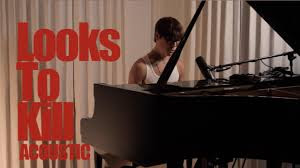
We have a lot of music, but there will be a story, a thread throughout all of it. The song we didn’t mention, “Looks to Kill" is part of this batch.

“Looks to Kill” by Fox Wilde

"Looks to Kill" was the starter of the whole world, and that song was really actually me killing myself off. We did a video, and you see me running from something. It actually seems as if a girl is killing me off, but then it’s revealed that the new character is me. (To see the video for “Looks to Kill,” click here.)

A lot of the visual aspect that you'll see is me facing me. A lot of this is staring at myself, looking at myself, and facing my old self. I think a lot of people battle with that. I think a lot of the things we battle with in our lives are our internal demons and internal kind of issues. I know that's what I was going through. So that’s what this whole world and album is about.

JC:  Is there anything you want to say about this whole musical progression of Fox Wilde from 2017 to now? It took a few music directions along the way. What are your own feelings about the journey you took?

DL:  I think this now is where Fox Wilde has always meant to be and supposed to be. Fox Wilde always had the foundation there. The meaning of Fox Wilde was to be bold, to be daring, and to be confident. But it was this kind of switch where the meaning now has much more meaning. It wasn’t that I needed to conform to it the way other people should see me, or I needed to be bold in order to do all of these things. It was like, no, no, no, Fox Wilde is bold and daring because it's owning yourself. Owning those demons. And for that progression, it took iterations.

Getting to this place became everything I think we wanted to do musically. I think it’s everything we've wanted to do in a storytelling fashion. And so this progression took a while for sure. It was just discovering what we could do musically. I think musically, we came more in tune with ourselves and lyrically and melodically. It was putting in the hours to get to where we're at.

It's like trying a lot of things and COVID made us reflect and slow down since we can't play live, so I guess we're really going to actually have to focus on this next phase, which is an album, which is music, more music. That next step of creativity and really focusing in 2020 was a culmination. It was just like the perfect concoction of all these things happening in life, and A Psycho Killer with Desire is our answer to all of it.


Tuesday, November 17, 2020

A Very Candid Conversation with Deen Castronovo


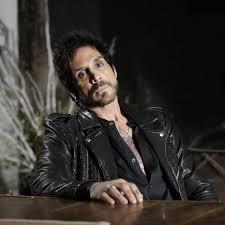
Deen Castronovo (year unknown)

Deen Castronovo started his musical career behind the drum set when he was 16 or 17 for the heavy metal band Wild Dogs (1982–1987). His drumming caught the attention of Mike Varney, head of Shrapnel Records. Mike put him in contact with many talented guitar players, including Tony MacAlpine and Marty Friedman. Through Tony’s connections, Deen met guitarist Neal Schon of Journey and Santana. In 1987, Neal asked Deen to join the hard rock band Bad English along with Journey keyboardist Jonathan Cain. Bad English had a number-one hit, “When I See You Smile.”

Bad English broke up in 1991. In 1993, Deen played with Ozzy Osbourne on Ozzmosis (1995). Geezer Butler of Black Sabbath, who also played on Ozzmosis, asked Deen to play for his band GZR. Deen played on GZR’s two albums Plastic Planet (1995) and Black Science (1997). In 1995, Ozzy fired Deen, but Deen rebounded and played drums for Italian artist Vasco Rossi.

In 1998, Deen got the call from Neal Schon to play with him, this time with the legendary rock band Journey. Deen is a rare breed of drummers who can sing lead vocals. However, Journey tunes are not easy tunes to sing due to all the high notes that former Journey vocalist Steve Perry hit. That Deen can sing a Journey tune and still be able to play drums is amazing.[Side note: I saw Journey in 2014 and did not expect that Deen would sing lead vocals. It was very impressive.]

However, in 2015, Deen was arrested in a domestic dispute, and as a result, he was fired from Journey. A year and half later, Deen continued his musical career and got session work, and then he joined the Dead Daisies, an Australian band. Various people who played with INXS, the Rolling Stones, Whitesnake, and Nine Inch Nails have played with the Dead Daisies. In 2018, Neal asked Deen to partake in a musical project called Journey Through Time. Journey Through Time covered some of the familiar Journey tracks but also a lot of rare and obscure Journey tracks. At the time of this writing, Deen plays drums for a country rock band, The Rise Above, which has members from Chicago and Rascal Flatts.

Deen’s career is both impressive and resilient. This candid conversation covers the high points, low points, and comebacks of Deen’s career. I want to thank Cat Swinton of Catalyst PR for setting up the interview with Deen, but most of all, I want to thank Deen.

Jeff Cramer: So what encouraged you to pick up your sticks?

Deen Castronovo: Kiss, dude. Kiss encouraged me to pick up my sticks. My older brother brought home a Kiss album, and I saw the album cover and I was hooked. I just loved the way they looked, and then I heard the music and of course loved the music. I mean, I knew from six or seven years old that I wanted to play drums, but when I saw Kiss, that was it for me. I mean that was it.

JC: Your first group was Wild Dogs.

DC: Yeah, Wild Dogs is a heavy metal band out of Portland [Oregon] featuring Jeff Mark, the guitarist, who is a freaking monster player. Danny Kurth was the bass player, and Matt McCourt was our lead singer. Wild Dogs was just a little local act we did, like Seattle, San Francisco, and LA. We just went back and forth and up and down the West Coast playing shows. So yeah, it was a fun band, dude. I joined that band when I was 16 or 17. I was pretty young, but it was a blast.

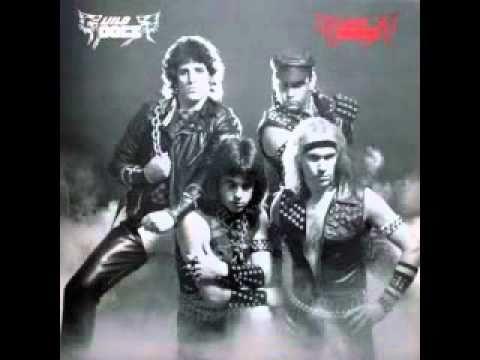
We got a deal with Shrapnel Records because of Jeff's playing. Mike Varney was the head of Shrapnel Records. Varney discovered me, and he got me involved with Tony MacAlpine, a major guitar player. And then he had me play with all the major guitar players—I went to Tony MacAlpine to Joey Tafolla to Marty Friedman and Jason Becker. [To hear “Metal Fuel” by Wild Dogs, click here.]


Wild Dogs (Deen, top left) (1983)

JC: How did you meet Neal Schon?

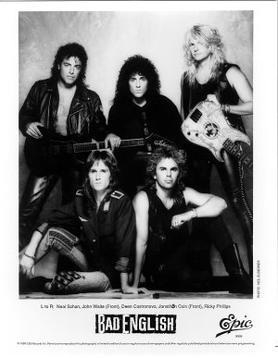
DC: From playing with Tony MacAlpine, I met Neal. Journey broke up in 1987 and then Neal formed Bad English. Neal got me into Bad English with him. Then we just took off from there.

JC: Bad English had two Journey players in the band: Neal Schon and Jonathan Cain. This would begin your association with Journey.

DC: Both knew I was a huge Journey fan. I knew all the songs. I loved Steve Perry’s lead vocals. I loved Steve Smith's drumming. So when they asked me to join Bad English, it was a no-brainer. I was like, “Yeah, I'll be there.” [Laughs] Incredible. Really, really cool.

Bad English (Deen, top middle; year unknown)

JC: Bad English has a top 40 hit, “When I See Your Smile.”

DC: "When I See You Smile" was number one for two weeks. It would have been three, but Milli Vanilli knocked us off, and then we found out that they were lip-synching the whole time. It's like, “Well, can we go back up?” [Laughs] [To hear “When I See Your Smile,” click here.]

JC: Okay. How did you go from Bad English to Ozzy?

DC: I got a call from Steve Vai ’cause I had done a couple records with Steve. Steve said, "Hey, man, Ozzy's looking for a drummer. I'm playing guitar. Do you want to come in and try this?" I was like, “Heck yeah.” So I came in and Ozzy hired me on the spot, right after I played the first time. We ended up going to New York and wrote songs. I guess the label didn't like the direction that Steve was taking the band, which I thought was kind of crazy because Steve Vai was writing some killer stuff. Steve was replaced with Zakk Wylde and Ozzy kept me on. I was there from '93 to '95. [To hear “Perry Mason” by Ozzy Osbourne, click here.]

JC: From Ozzy you also met Geezer Butler, the bassist in Black Sabbath.

DC: Ah, Geez, I love Geezer. I did two records with him as a member of his band GZR. Those records will probably be the pinnacle of my metal drumming. The first record is unbelievable. They were all one takes. GZR just killed on that record. It was recorded in the studio in Massachusetts, Long View Farm Studio. It was 90 degrees outside when we recorded it, but we were in a barn upstairs so it was probably 103 or 104 degrees. It was hot as heck up there. And I remember just sweating—like profusely sweating—but the songs came out so good. There was so much energy, and it was unreal. After our first song was done, the band came walking down, and Geezer had his hands over his mouth. We were like, “Oh God, does he not like it? Are you cool with this, man? Do you like that?" And he took his hands off his mouth and he had a big smile on his face, and he goes, "It's effing brilliant." [Laughs] So we knew we had something there. [To hear “Drive Boy Shooting,” click here.]

JC: You had played with two Black Sabbath guys: Ozzy and Geezer. Were you ever considered to play drums with Black Sabbath?

DC: No, I pretty much went from Ozzy to Geezer's band, and then Geezer went on to do other stuff. I don't remember what, but he was doing his other things. I was ready to quit music after getting fired from Ozzy. I was so heartbroken.

JC: What happened with Ozzy?

DC: I don't know. Ozzy said, “It’s just the chemistry wasn't right." And I was a very busy player, and also I'm a very happy guy. I didn't fit into the doom-and-gloom thing. I can remember one time before a show, I said, "Man, let's go out and kill it," and Ozzy was like, "Don't say that. You'll jinx it. You'll jinx the show." I was like, “What?” I didn't really fit in, so I got the boot. First I was the greatest drummer Ozzy ever had, and then at a press release I was the worst drummer he ever had, so I was like, “Yeah, well, okay.”

But I was ready to quit music altogether, dude. I was like, “I'm done. Don't want to do it anymore.” After the Geezer and Ozzy thing I got a call from Vasco Rossi, who's like the Bruce Springsteen of Italy. I shouted out a really exorbitant amount of money to play with Vasco because I didn't want to do it. I figured, “Okay, they'll pass,” but they took the amount I requested. So I was like, “Oh, shoot, I gotta do this now.” Vasco only plays is Italy—he doesn't play anywhere else, only in Italy. I did three nights at San Siro, a soccer stadium. One hundred thousand people a night. That was one of the best gigs of my life, next to Journey. I'd put it underneath Journey, definitely. [To hear Vasco Rossi live in 1997, click here.]

I toured with Vasco from '95 to '97. I was eating the food in Italy and I got really fat. [Laughs] So after Vasco, I got the call from Neal on February 16, 1998, to join Journey. I'll never forget that date . . . one of the greatest days of my life.

JC: Steve Augeri was the singer when you first joined Journey.

DC: Yeah, we started with him and it was tough, dude. The first six months of touring maybe five hundred people showed up. I mean, it was that bleak. I remember Jon Cain saying, "No, we gotta reeducate the fans. Let them know that we're still here, we're still doing stuff, and we've moved on from Steve Perry." I remember our manager at the time, John Baruck, saying, "Well, let's do something with Foreigner. You know, we'll do Journey-Foreigner, a co-headliner tour. Let's go on the road.” And that was when we started playing to sixteen or eighteen thousand people. We were killing it. It was great to rebuild something that was so legendary and had such an amazing legacy. So I was very, very blessed and honored to be a part of that.


Journey (Deen, second from right; year unknown)

JC: You also sang lead in Journey. When did you know that you had a voice?

DC: Well, I was in a band when I was about eleven, and my guitarist, who was like twenty-three at the time, brought over Journey’s Infinity and said, "Here, learn ‘La Do Da’ and try and sing it." I hadn't reached puberty yet and I had a high voice. So it worked out really good, and that was where I started to learn to sing.

Steve Perry was always a god to me vocally. I mean just unbelievable. It was him and Ronnie Dio. Those were the two guys that I loved singing-wise. I loved Journey and I would sing to Journey all the time, but of course never close to Perry until I joined the band and learned a lot of his inflections and how he phrased things. And again, I’m not even close, but it's an honor. I get hammered for that. "Oh, you're just a Steve Perry clone." It's like, well, you gotta learn from somebody. I might as well learn from the fricking best. You know what I mean? Nobody touches that guy.

In Bad English I remember we had just finished "Best of What I Got" in the studio, and they said, "Well, can you sing?" I said, "Yeah, kinda." And they looked at each other, and I went in and I did the backgrounds to "Best of What I Got." I could see all the guys in there high-fiving and laughing 'cause they had no clue that I could sing as well. So it worked out really good. And then Neal and Jon gave me that chance to sing when Steve Augeri lost his voice, and it just kind of snowballed up, man.

JC: There aren’t many drummers who sing, and you're one of the rare breed who actually sings. What is it like singing while playing drums?

DC: The drumming takes a back seat. It's almost like the drums are on autopilot. I know what I need to do there, and I focus solely on the vocals because I don't want to butcher the songs. One thing I always said was, “If I sound like crap, you guys better fricking tell me” because I didn’t want to screw these songs up, and I certainly didn’t want the fans crucifying me for butchering the song. So they were like, "No, no, no, you sound good, man. Keep going. Keep going." And I got better and better at it. I don't consider me a lead singer—I play drums and I sing, but there are so many great singers out there. It's like I can't even get near those guys. I’m still learning as a singer, man. I think I got drumming down, but I got a long ways to go with singing.

JC: What would you say was the hardest Journey song to sing?

DC: Oh, dude, they're all hard. I think the hardest one for me to sing was “Open Arms" because it's so tender. I sing pretty hard, and so I was trying to learn how Perry sang that. That was a hard one to do. When I sing "Mother, Father," that song’s a bruiser. You gotta go out there and you gotta sing hard. It's not something that you do lightly. "Open Arms" is so tender and so soft, you really gotta know Perry's inflections and phrasing. And if you're reading, Mr. Perry, no one touches you to this day. He's the best of the best, dude. [To hear Deen sing “Open Arms,” click here.]

So “Open Arms” was probably the hardest one for me. I wanted to get it perfect, but singing it was only short lived. I only got to sing it for a few years until Arnel [Pineda] joined, and fricking Arnel kills it, just fricking smokes that tune. So yeah, that would be the hardest one for me to sing, definitely.

JC: Okay. Arnel Pineda came in to sing after Steve Augeri left. What would you say is the difference between Steve Augeri and Arnel?

DC: Well, you know, Steve was more of a bluesy singer, and I loved the way that Steve sang because he put a little bit of a blues taste to it, which I thought was really cool. It wasn't just so R&B. But Arnel is one of those guys like me . . . he's a chameleon. You show him something and he can sing it. And he’s got so much soul, man, just so much passion when he sings. He really does, and to listen to him . . . I’m like, “Dude, I'm not even close to that.” The difference I think is that Arnel could sing anything whereas Steve brought in his own style to the Journey songs. So yeah, that's kind of what I saw. That was the difference for me.

Journey (Deen, second left, 2013)

JC: Do you want to talk about when Journey ended for you?

DC: Oh sure, bro. I mean, it is what it is. I was on a twenty-four-day low on methamphetamine, believe it or not. I was a mess and I got into a domestic dispute with my wife, Deidre, and it got bad. She had to call the police. Thank God she did. Saved my life. It really did, believe it or not. As horrible as it was, it saved my life. There were a lot of charges on me. It was heartbreaking 'cause I couldn't really defend myself, but a lot of those charges were dropped. I was charged with the two charges out of the fifteen they had for me. It was a really rough time, but we're still together. We're still very strong, actually better than ever, and she's right here watching me so—

JC:  Really?

DC: —if I say anything wrong . . . [Laughter] No, she's my champion and I owe her a lot. I really do. She saved my butt. Journey did what they had to do. I mean it's a business, and the repercussions of the charges I had is horrible for a business. I needed some time. Nobody would even talk to me. It was pretty bad. You find out who your friends are, dude. I'm telling you, you find out quickly.

I needed to find out what was important in life, and what's important is keeping my crap together and taking care of my girl and my dog and my three cats. So, you know, as horrible as it was, I'm grateful.

JC: So what did you do after Journey?

DC: Well, after Journey I put the drums away, man. I literally stopped playing for about a year and a half. Didn't touch them and didn't want to look at them. Didn't want to listen to music. Just focused on recovery, staying clean, and getting my life back together. Music, career, it didn't matter at that point. What got me back was Serafino [Peruigno], who ran Frontiers Records and actually gave me another chance. He asked me to drum on a couple records and some background singing as well. I gotta give Serafino a lot of credit, man. He really gave me a shot.

He and the Dead Daisies, man . . . that was another one. I'd played on Johnny Gioeli's record, and like two weeks afterwards I was like, “Okay, now what do I do? I've got nothing coming. I gotta support my family, but what am I gonna do?” And that was when the Dead Daisies called. I mean if that isn't a Jesus Christ shot, I don't know what it was. I was like, “You're kidding. You want me, I'm there instantly.” So I gotta give the Daisies’ manager David Edwards and David Lowy from The Dead Daisies for giving me a shot when I didn't have a lot of friends. So that's where I've been ever since, man. Still doing Dead Daisies, and got this other little project I'm doing, this country thing, and that's about it.

JC: So the Daisies came. Was Motley Crue’s John Corabi the singer when you first joined?

DC: Yep, Johnny was the singer. We had Marco Mendoza on bass, and Doug Aldrich and David Lowy on guitar. Johnny, man, he's a great singer. Guy can sing the phone book. He's a badass. That's the beauty of it. I've never played with any crappy musicians. I've been really fortunate to play with the best of the best, and that makes your job so much easier and much more fun because I look up to these guys as masters of their instruments. So to be working with them again, it's humbling. It really is. I don't take it for granted, man. I get tight with these guys. I bond with them, you know, so they're always a part of my life, and I still keep in touch with Johnny and Marco a lot.

JC: As the Daisies went on, eventually the lineup would shift to Glenn Hughes on vocals and bass.

DC: Yes, the god. And I love Glenn too, dude. I mean, come on, he’s in the Rock and Roll Hall of Fame for being in Deep Purple, and what a voice. He's a fricking animal. Being able to sing harmonies with that guy, 'cause he's got perfect pitch—it's so effortless to sing with him because I don't have to really think about pitch. I just follow right with him and it's right on. So it's really been an honor. I love working with him. We just got back from rehearsals in LA last week, and we really had never played together. We did the record but had never gotten in and played those songs as a band, and once we did the first couple of songs, it’s like dang. He and I are like a fricking freight train, bro. I'm telling you.

His bass playing speaks for itself because he plays very percussively. He's a very aggressive bassist. I'm a very aggressive drummer, so it fits really good, Jeff. It's pretty amazing. You guys are gonna freak out when you see it live ’cause it's amazing.

Dead Daisies (Deen, far right, 2019)

JC: You also did something incredible—Journey Through Time with Neal Schon and Journey’s original keyboardist Gregg Rolie. You did a lot of rare Journey tunes that aren’t often heard at a Journey concert.

DC: Yeah, dude, that was huge. That was an honor. When Neal talked about doing that, we were just kinda throwing the idea around, and he said, "What if we do something with Gregg Rolie and we'll do all the other stuff they don't get to hear at a Journey concert?” I was like, "Dude, I'd be honored." And so we had a chance to do this benefit for the fire victims in Sonoma, Napa, and Marin County. We did that show in February 2018, and it was just incredible. Being back with Neal again . . . I mean, he's a brother, and he always will be. Whether I'm in Journey or not, he will always be very close because he took me to the next level, so I owe him a big, big debt of gratitude.

But oh those shows. Man, it was unreal. It was raw. It was perfect. It was just an incredible experience to be able to play with Neal again and Gregg Rolie. My God. I wish we were still doing it, to be honest with you. I loved that band. That was fun. [To hear Journey Through Time do “Any Way You Want It,” click here.]

JC: Didn't Gregg also call you in after that for his solo album?

DC: Yeah, we were actually working on it and getting some stuff together. Gregg’s got a bunch of ideas, and I got so dang busy with the Dead Daisies that I really couldn't get it finished. His solo album started going in kind of a Brazilian direction, which I wasn't expecting, to be honest. I thought we were gonna go for more of a Journey-esque thing, but he wanted to get away from Journey. He wanted to go in his own direction. We haven't really discussed finishing this record or not. I don't know if we will or not, but I had a great time with Gregg and I love him to death, man. I really do.

JC:  Getting back to the Dead Daisies, I’ve heard your recent stuff. I've heard the recent two singles with Glenn, but I also heard The Lockdown Sessions EP. One thing I want to talk about is covering Creedence Clearwater Revival’s “Fortunate Son” where you sing lead.

DC: I didn't expect to do it. Glenn was like, "Well, go ahead. You sing it, bro." I was like, “Really?” I'd never really read the lyrics. In the past, John always sang it, and I did my backgrounds and stuff. When we covered it, I had cheat sheets on the floor and I had my glasses on because I didn't really know the lyrics, and the Daisies were pressed for time. But it was like, “You gotta sing this today.” The lyrics are so good and, God, I hope I did it justice, dude. Come on, John Fogerty . . . so good, dude. He don't suck. Put it that way.

So yeah, it was challenging for me, but really it was great. It was humbling to be able to sing that song ’cause they're a sixties’ band and stuff, and it takes me back to that time when the Vietnam War was going on and how intense it was. That song kind of explains the times. I was like four or five when the Vietnam War was going on, so I didn't really know what was going on there. But yeah, that song really kinda opened my eyes to like, “Man that was a struggle.” Very heavy, intense. Protest song, dude. I love it. [To hear Deen sing Creedence’s “Fortunate Son,” click here.]

JC:  I'm sure this is a question a lot of Journey fans ask, which I wanted to ask you: Did Neal ever call you when they fired drummer Steve Smith? 

DC: Well, yes and no. I mean he talked to me and said, "What are you doing, bro? What are you up to?" I said, "Well, I'm doing the Daisies still, and I've got this other project with Jay DeMarcus from Rascal Flatts and Jason Scheff from Chicago called The Rise Above.” The Rise Above just do little, tiny corporate things when the Daisies aren't doing stuff. And he was like, "Wow, man. Well, I'm letting you know right now there are some big changes coming up, so check it out. It's gonna blow your mind." So I said, "Are you asking me back? Did something happen with Smith?" And he goes, "You'll see in a few more days.” And then boom, all of that stuff came out with Smith and Ross Valory fired from Journey.

I didn't know what to say. I kept calling, like, "Are you guys gonna ask me back? Is that kinda what's going on?" He said, "Bro, we're not sure yet. Just kinda stick tight. We're not sure what we're gonna do." And then they ended up going in a different direction. Jonathan thought, “Well, you know, instead of going backwards let's go forwards. We'll get Randy Jackson again on bass and Narada Michael Walden, who's an animal drummer, an amazing singer, songwriter, and producer.” So they decided to go in that direction, and I understood. You can't get any better than Narada and Randy Jackson. I mean seriously, they're great.

And when this was all going on with Journey, it was pre-COVID. The Dead Daisies were supposed to start rehearsals in April, so if I did get the offer for Journey, I couldn't do that to the Daisies, give them like four weeks to find a drummer that sang. That's rough. I mean, Journey is a huge thing, but I've got to be able to sleep at night too, and even if they had said, "Look, come back," I don't know if I could have.

JC: Really?

DC: I couldn't do that to the Daisies. I couldn't do that to any band. That's just not right to do. There are certain things you don't do in this business, and having those guys try to find somebody in four weeks before a major tour would have been really cold-blooded. Neal and I still talk a lot, and I wish him well. As for me, I'm grateful that I'm still doing what I love, maybe not on a grand scale like Journey, but at least I'm doing what I love and making a good living doing it.

JC: Yeah. The Dead Daisies were gonna tour with Foreigner and Judas Priest.

DC: Yes. Dude, we had them all set up and it was all ready to go, but that got thrown out. Everything got thrown out. We were supposed to start this year. We've been doing a lot of social media, a lot of content and stuff like that, to try and keep the interest up in the band. I gotta thank you and all the journalists that have asked for interviews for us, ’cause if it wasn't for you guys we'd have nothing. Seriously. I mean you're keeping our name out there and you're keeping the band alive, and so I gotta thank you, and the band thanks you. Because if it wasn't for you guys and all the journalists, man, we'd be screwed. Seriously. You can only do so much social media content. You know what I mean? Just thank God for you guys, man. I gotta tip my hat to you, bro.

JC: How have you as a musician dealt with COVID?

DC: Well, for me . . . I never really went anywhere. I'm not one of those guys that goes to dinner every night, heads out, goes to clubs, watches bands and stuff. I'm a homebody. When I'm off the road, I'm off the road. I just stay at home. So it wasn't a big change for me, but obviously it was a big change for the music industry and life in general. I mean everything shut down. Bands aren't playing. Venues aren't open. So a lot of people have been affected by this. A lot of musicians, a lot of friends of mine, are selling guitars and selling stuff just to keep alive because nobody can tour.

So I'm watching that and that's heartbreaking to see. It really is. It's like, “What do you do?” So that's kind of what we're doing with The Rise Above, this country thing I'm doing. We’re doing benefit concerts. The first one was for the music people, the crews, and the people that can't work that are off the road. They can't go on the road. I don't know how much we raised, but we raised a ton of money for the crew members in the music industry. It's like a big fund and tried to help them out. I think that's what's kind of hurt me or touched me the most is knowing there's a lot of musicians out there and crew people that can't do anything, and it's hard. It's really hard.

JC: Talk to me about The Rise Above band.

The Rise Above (Deen, middle, year unknown)

DC: It's myself, Jay DeMarcus, the bass player for Rascal Flatts, and Jason. There are five guys in the band. We got Tom Yankton, who's in Rascal Flatts as a utility guitarist. We also have Chris Rodriguez who's played with Kenny Loggins for eons, Amy Grant, and Peter Cetera. He's an amazing guitarist as well. So it’s a little five-piece unit. We all sing lead, and it's like the Eagles on steroids. It's cool stuff. Great music. They write some great songs. Right now I'm working with Jason Scheff, the singer for Chicago, and my god. What a voice. And not only that, he’s a bass player—dude, he's a wicked fricking bassist. I had no clue how great he was as a bassist, and that blows my mind. We're recording this little country record, and Jason's been helping me as far as singing ’cause I really don't know what to do. I'm really one of those guys that, as singing goes, I'm a chameleon. Show me what you want, and I can do that. But it's definitely a different approach vocally for this country rock stuff, so Jason's been ace at helping me through this and showing me inflections and going, "Well, try this." He's really great at what he does. I put him up there with Perry. You know ,Jason doesn't get a lot of respect, but yeah, he's a badass, man. People don't know how good Jason is. [To hear The Rise Above perform a medley of Rascal Flatts, Chicago and Journey tunes, click here.]

We go out and do little benefit concerts. I mean nothing major. We're not doing a big tour or anything like that. It's just something fun to keep us busy. I'm actually flying to Nashville in a couple of days to do another benefit show for the first responders, the nurses and doctors, and people that were there when COVID hit. Then I gotta go under the knife, dude. I gotta get back surgery.

JC: Oh, what happened there?

DC: This is my second one. [Laughs] Getting old, bro, really old.

JC: I'm using the word "journey" here, but I mean it in a different sense than Journey the band. Talk to me about the journey you had when you first started with Wild Dogs, then with Journey, and then your comeback after Journey.

DC: It’s been incredible. I mean, I've been very fortunate. My career is like storybook. It really is. From where I started to where I'm at now, I’ve been very, very, very, very, very, very fortunate to have done what I've done. And if I was to stop today, I could look back and say, “Man, what an amazing career.” I dreamed of doing this when I was seven years old. This is what I wanted to do. And to be able to fulfill that dream is massive. I give God all the glory for that. So yeah, it's been quite a ride, bro. Definitely quite a ride.

Wednesday, October 14, 2020

A Very Candid Conversation with Carl Fischer

Carl Fischer (year unknown)


Carl Fischer has the gig of a lifetime. He is the trumpet player for the Billy Joel Band. He played trumpet in Movin’ Out, a Broadway musical centered on Billy Joel music, and his playing  caught the attention of the Piano Man himself. After Movin’ Out ended, Billy asked Carl to audition for his band. Carl got the gig and has been playing trumpet for Billy Joel ever since. He played the last concert ever held at Shea Stadium, and has had many appearances at Madison Square Garden.


Carl has also played with other talented artists. Early in his career, Carl worked as a stage manager and eventually played trumpet with jazz legend Wynton Marsalis. He also played with another jazz legend, Maynard Ferguson, first as Maynard’s assistant and then as a trumpet player. Carl played with both jazz legends in the 90s. In 1999, Carl recorded his first solo album Organic Groove. Carl promoted his album by being the opening act for Maynard.  


In 2001, Carl moved on to Movin’ Out and then Billy himself in 2005. While with Billy, Carl found time to be part of two major acts: Blood, Sweat & Tears and Diana Ross. He juggled all three major acts together for a couple years before solely focusing on Billy.


Today, with the pandemic, Carl still is busy playing music. He has his own band, Sunshine City Brass, which plays New Orleans Jazz. In addition, he holds virtual jam sessions every Tuesday.


In this candid conversation, we discuss Carl’s career with jazz greats Wynton Marsalis and Maynard Ferguson. We discuss his time with Billy Joel, Blood Sweat & Tears, and Diana Ross. In addition, we look at Carl’s current musical activities during the pandemic. I want to thank Stephen Wright, Carl’s manager, for setting up this interview, but most of all, I want to thank Carl. 


Jeff Cramer: So what got you interested in music?


Carl Fischer: What got me interested in music was growing up on Long Island in a musical household with my dad. My late dad, Charlie Fischer, was a wonderful jazz trumpet player. He always had music on in the house. My mom loved music also, and they were very supportive of me playing.

My dad had a few bands and always rehearsed in our basement when I was growing up in Baldwin, Long Island, so I always had instruments in my basement. I just wanted to be like my dad. He had a quote that I hold dearly to my heart to this day: "When I go to play music, I don't go to work. I go to play. When I get up in the morning at six, I go to work. I go drive a truck. That's work. But when you go and play music, you go play." And so that stuck in my head. That's what got me into it, and the recordings I heard playing in my house of Maynard Ferguson, the band Chicago, and Buddy Rich. I loved Frank Sinatra, and of course Billy Joel was always on in my house too. It was very eclectic, but I was very fortunate to have that in my life. That's why I wanted to play trumpet.


JC: Your first professional gig would be with a circus band.


CF: Wow, you did your homework. [Laughs] Wow. Thank you, man. Yeah, my first score was with a band that had two names: the Holiday Hippodrome Circus and Showtime Follies. That was out of Sarasota, Florida. I joined the band. It was just a Hammond B3 organ, drums, and a trumpet.


It was a smaller stage show—they had some animals. I learned a lot really quick on that six-month stint. Yeah, I ran off and joined the circus. [Laughs]


JC: You were mentioning you learned a lot. What did you particularly learn during that six-month stint?


CF: That the road is not as glamorous as people make it out to be. At that time we traveled in travel trailers. We'd stay at rest stops and KOAs [KOA stands for Kampgrounds of America.] We'd stay wherever we could for free. But if we stayed at a campground, that was a special thing. It was mostly parking lots.

It was a dichotomy of musicians living together and people living together for six months at a clip who were not necessarily there for the music. You don't go to join a circus to play the music, really. You go there because it's a gig.

So I learned really quickly, "Okay, let's become proficient and professional." And it was probably one of the best learning experiences I had. What I also learned from it was stamina. I was the only horn, and I was basically the only melody maker other the Hammond B3 player. He played left-hand bass and his right hand for chords.

I would have to carry the melodies, and there were a million melodies, so the horn was on my face constantly. It was a two-hour show. The stamina of playing two hours straight with the horn on your face is something different from your normal jazz gig or rock gig. So I learned a lot. I learned a lot about myself and a lot about my playing.


JC: What was your next gig after the circus band?


CF: At that point I was living in Florida, and I came back from the circus. The next gig I joined was a local band here in Tampa-St. Pete, Florida.

It was Belinda Womack. She's a jazz singer here in Tampa, Florida. I joined her band. She had a club band, and we worked three or four nights a week in all the clubs. She had a great following.

One of her friends and producers of that band was the late, great, famous Nat Adderley, a great trumpet player. His brother was [jazz saxophonist] Cannonball Adderley. So I got to meet Nat through Belinda. Belinda let me pull solo a lot.

A steady gig in Tampa was nice. I didn't have to travel. I had a steady gig, and I was saving up to move back to my home state, New York. So I guess I did that for a year or two and then went back to New York.


JC: Who did you play with in New York?


CF: An offer came up. A friend of mine asked me if I would like to be a stage manager for the Lincoln Center Jazz Orchestra, which it was their first national tour in 1992. The director of that band was the infamous, wonderful [trumpeter] Wynton Marsalis. I got on as a stage manager, which I never did that. I didn't even know what it was.


That band was the who's who of jazz guys at the time. I was a big fan of the late, great Lew Soloff, the infamous lead trumpet player with Blood, Sweat & Tears. There was also the late, great, and wonderful gentleman and great-sounding trumpet player, Joe Wilder. Then the late, great, wonderful trumpet player Marcus Belgrave. And Sir Roland Hanna on piano. It was an unbelievable band with Joe Temperley on baritone sax.

So I got to learn how to be stage manager really quick, and Wynton heard me play trumpet. It was the second day, and he heard me play trumpet. I brought my trumpet out with me ’cause I wanted to keep my chops up. He heard me play trumpet and said, "Okay, well, you're playing fifth trumpet in the band. We have some extended tunes that have some fifth trumpet, and we'd love for you to join and play trumpet."

Wynton was very influential and was very accommodating. Man, I learned so much from those guys . . . Wynton and all those guys. I have wonderful memories and relationships with them throughout the years. I’m very, very blessed to have that.


I came back off that tour, and the Lincoln Center was getting ready to do another tour and they called me to do it. I got big britches and I asked for more money ’cause I was playing trumpet and being a stage manager. They originally said they were gonna give it to me, but it just didn't work out logistically for them, and they decided to go a different route, which was fine.


At that time, it was very hard for me to take, but within a week I got a call from Maynard Ferguson, who was my childhood hero on jazz trumpet. I got a call from his manager, whom I developed a relationship with, and he said, "Hey, we know you were just out with the Lincoln Center with Wynton, and a position came open for Maynard Ferguson. But again, it's more of a production role being his valet, which is basically Maynard Ferguson's personal assistant. We know you're a player. Maynard knows you're a player. Obviously, there'll be time enough for that, but we really need you to mold to this role."

I told them when and where, and they told me to meet ’em at JFK Airport in a week. JFK was literally eight miles from my house. I went to JFK. After picking him up at JFK, I was on and off with my friend and mentor Maynard for twelve years. He was probably the biggest influence of my life spiritually, musically, and educational-wise, on and off the horn.

Being Maynard’s personal assistant and valet, I learned more about him and his day-to-day and became more friendly with him and seeing how he worked on his craft and his business and how he treated people. To me, there's not a day that goes by that I don't think about and take those lessons that I've learned from him. That was a very good growing time for myself as well. I miss him as well. [To hear Carl’s solo with Maynard’s band, click here.]


Maynard Ferguson(left) and Carl Fischer(right) (year unknown)


JC: During your time with Maynard, you would do your first record, Organic Groove.


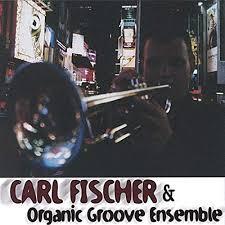
CF: In 1999, I put the band together for Organic Groove. I wanted to put a little club band together called the Organic Groove Ensemble. I have a friend who is a Hammond B3 player, and I played with him with Maynard Ferguson. He's one of the best, in my opinion: Ron Oswanski. He’s from New Jersey. He was the impetus of the Organic Groove Ensemble playing left-hand bass on the Hammond B3. I wanted John Scarpulla to play tenor sax. John and I were doing a lot of session works, and John was one of my great friends and still is to this day. I wanted a funky, feel-good jazz bar band—the "organ" was a play off "organic." And I just wanted a funky, feel-good “groove” thing.

So the Organic Groove Ensemble would play these clubs on Long Island and in the city. We played at a little place in the Rockville Centre area. It was called the Vibe Lounge right across the street from the train station on Sunrise Highway.

And the funny thing that ties this whole thing together is we recorded that record at a studio in Oceanside, New York. The studio had just opened. We recorded it, and we did it early ’cause John had to go to Chicago to do the Movin' Out off-Broadway Chicago run before it even got released on Broadway.


Organic Groove album(2003)

The day before John went to open Movin' Out in Chicago—prior to previews—was the day before the last Organic Groove session. So we did that record, and we put it out. I jumped on the road. I went back on the road with Maynard at that time, and I did another year with Maynard.


The record came out, and the album sold really, really well ’cause Maynard let me open. I was fortunate that Maynard let me open his concerts playing Organic Groove music. He also let me sell the CDs at the merch table. Man, we sold quite a bit of merchandise. It was kind of like a grassroots campaign, and Maynard was behind it. [To hear the opening track from Organic Groove, “Renaissance Man,” click here.]

John was already on Movin' Out, and so that's when I left the road when Movin' Out got established. I did a year with Maynard, sold a whole bunch of product, and decided that maybe I should check into this Billy Joel Broadway thing and see what that brings me. [Laughs]


JC: Tell me how you got to be in the Movin' Out production.


CF: Movin’ Out started rehearsing in 2000. John Scarpulla was the saxophone player of that show. Chuck Burgi, who is now Billy's drummer, was the principal drummer of that show.

I got a call around 2001. I was on the road with Maynard. I got a call to sub. They had a principal trumpet player, Barry Danielian, who is a friend of mine. Barry is a wonderful, wonderful, great trumpet player. He did the first couple of years, but when the show first started, Barry made me a designated sub.

So I actually left the road to be a designated sub on Broadway. I wanted to get off the road, and I started subbing quite a bit. Barry was doing a lot of recording sessions and wasn't around for a lot of Movin’ Out. He gave me a lot of his work at Movin' Out, so I was his sub.

Barry had another show coming, and he jumped off Movin' Out to get another show. Tommy Byrnes, who was Billy Joel's music director at the time, was the lead guitarist of Movin' Out. Tommy offered me full time for Movin' Out, and I want to say that was late 2003 or 2004. So I did a year straight on Movin’ Out, and then that's the impetus of joining Billy's band.

Yeah, Movin' Out was great ’cause it was a great band. The wonderful, great Greg Smith was on bass, and Dennis DelGaudio was the guitar player. There was a bunch of us Long Island morons. Wade Preston was a keyboard player in the band and frontman sometimes.

I played a lot with Kevin Osborne, who was the principal trombone player and one of the singers. Then there’s Scott Kreitzer, who is an alto player. I had never played with him up until that time, and we became really good friends. He's a great musician.

Of course Chuck Burgi, the drummer of Movin’ Out, and he’s Billy’s drummer right now. I became a fan of Chuck. I knew of Chuck's playing prior to Movin' Out because of Brand X and his recordings with Brand X. I actually got to the Movin' Out previews 'cause I had to go to the previews as a designated sub. I'll never forget this. I remember sitting in a preview, and the previews were only for certain people before it opened on Broadway. It was in the Richard Rodgers Theatre, and I was listening to Chuck Burgi warm up. Hearing Chuck warm up, I was like, "Man, this is the guy I listened to on these records." Hearing him just get loose on the drums and playing different grooves and how he goes through his whole thing . . . man, and how he gets limber, I was like, "Wow." 


JC: So how did the thing from Movin' Out come to playing with Billy himself?


CF: It was interesting because Twyla Tharp, the choreographer, and Billy Joel put it together. What was amazing is that there was a great energy there. The energy was always at ten, and the audience would go to eleven.


Movin’ Out wasn't your typical Broadway show. The band wasn't in a pit. We were on a travelator [a moving walkway]. We were over the stage. The thing moved, and it moved quite quickly. It moved up sixty feet down to the stage level. It moved all around.

We were part of the show, not like we were sitting in a pit and just playing your part. We had to dance around and we all jumped off the travelator at the end of the show.

We never knew when Billy would show up, and he showed up quite a bit. He'd show up—he'd come in through the stage jump onstage. No announcement. He just had an open-door policy, and he'd play the show with us. He'd play a couple tunes, and the crowd would go nuts.

Billy asked me, "Hey, who are you?" I was like, "Hey, I'm Carl.  I'm a Long Island guy, too, like everybody here. Obviously, I could talk to you about music, but I'm also a big South Shore boat fisherman. I'm a big bike guy, too. I just kind of like what you're about, man." He was like, "Oh, cool." It was just kind of passing.

So jump ahead, and I was running late. I was running up the stairway to get on the travelator like one minute before 8:00 when the show started. And there was Billy. He was like, "Hey, Carl Fischer. How you doing, man?” He remembered my name, which threw me for a loop. I'd met a lot of famous people prior to that, and I was very fortunate too. And for him to remember those things, it was like, "He remembered my name. He remembered the conversation."


My first scary moment with Billy Joel was rehearsing. After Movin' Out, Tommy Byrnes asked me to rehearse "Zanzibar" and a couple of other tunes at Billy's rehearsal space on Long Island in 2005.

So I came, and we played "Zanzibar." We got done, and it wasn't my best. I wasn't proud of what I played. It was okay. Billy looked at me and stopped. He got up off the piano, and he walked out. As he was walking out, he looked at me again and said, "Man, we sound like adults." I was saying to myself, "Oh man, I guess he hated it." Then he came back in and said, "Come on, let's do it again."

By that time his crew and band were giving me high-fives. I was like, "What?" And then Mark Rivera, Billy’s saxophonist, said to the monitor guy, "Hey, put Carl Fischer up in my monitor more. I really want to hear him better this time." What I found out later was that Billy equates “grown-up” music to jazz and classical, not pop. That was a really good compliment that we sounded like grown-ups. And so we did it two more times, and then we had lunch. I've been having lunch for fifteen years, and I eat good. [To hear Carl play with Billy on “Zanzibar,” click here.]


Man, Chuck and I talk about this all the time. I got to know Chuck in 2000, and we're coming on 2021 here. We both joke about having been playing Billy Joel's music for twenty years. We're both coming on fifteen years with Billy, and we had five years with Movin' Out. Crazy. We both pinch each other.

Man, playing in the Billy Joel Band . . .  not only are we all great friends, but it feels like such a great gel. I'm very humbled and honored to be a part of it.


Billy Joel (back) and Carl (forefront) (year unknown)


JC: As you are playing with Billy, one of the things I'm gonna ask about is the show at Shea Stadium.


CF: Shea was a definite time and moment and place, man. I think back on it now and a lot of people still think that it was just one show. It was two shows, which was very interesting and two different concerts totally. I remember even the rehearsing; we made the whole thing grander.

Billy wanted the band to sound bigger, so David Rosenthal, the keyboardist, had orchestrated strings and extra horns. I was so happy that Tommy Byrnes got our Movin’ Out boys back. John Scarpulla and Kevin Osborne came back on horn. Raul Agraz was playing Movin' Out on the traveling shows, also added as a horn. Pete Hewlett added background vocals as well as Kevin Osborne.

The rehearsals were fun, but I remember it was so freaking hot. I remember the vibe of the show when we actually had sound checks for the rehearsals for the guests artists of the day. I guess I had a Yankees hat on at rehearsal at Shea Stadium. I didn't have enough guts to wear it on the gig. Steven Tyler was coming in, and we were playing "Walk This Way," and he wanted horns on it. He came up to me, and I was sweating. He goes, "Hey, man, nice chops. I used to play trumpet when I was young." [Laughs]

I just remember crazy stuff like that. I don’t play on every song, and I have a big horn trunk at back of the stage there. I have a lot of my extra horns, and they're all in that case, and it's a very fragile case.

There was a guy during the show pacing back and forth that I’d never seen before. He had a Mets jersey on, and he was knocking into my horns, man. He almost knocked my horn case over, but he was just pacing. I said, "Excuse me, sir. Can I help you? Are you all right?"

I didn't put it together because we were at Shea Stadium and in the middle of the gig. The guy turned around—I didn’t put it together, but the back of his jersey said "Brooks." It was Garth Brooks. He turned around and looked at me and goes, "Man, Carl. Carl, I'm nervous." I said, "You're Garth Brooks." And he looked at me and said, "Yeah." I said, "You're nervous?" He goes, "Yeah, man. Billy Joel at Shea Stadium has got me nervous." I said, "Man, I know. You almost knocked my horns over." He goes, "Oh, I'm sorry.” I said, "No, I'm just busting you on it. I didn't know who you were." 'Cause Garth didn't make rehearsals. He just showed up.

And then of course the biggest surprise at Shea was having Paul McCartney come at the end of the last night for the last couple songs. We didn't know until the last, last minute. Having him come up was surreal because obviously he played Shea with the Beatles. So for him to close it . . . there were just a lot of great moments at Shea. I'll just leave it at that, a lot of great moments at Shea. [Laughs]


JC: You must have a lot of great moments with Billy at Madison Square Garden.


CF: Yeah, I could sit here for hours and just reminisce. There's so many great moments that have happened that Billy has brought in and brought people together. To me, that's a true sign of a great leader, and that's what I see in Wynton Marsalis. That's what I see in Maynard Ferguson. That's what I've seen in a lot of the people who I love working for, and Billy, he's number one, or if not, he's right up on top there.


Maynard and Billy, those guys know how to put things together. I mean, before a show, you hear, "Sting wants to come? Cool, have him come. Come on in." And it's just like that. Billy’s like, "All right, come on." A lot of the stuff at Billy’s show is very spontaneous, and that's jazz.

JC: One of the groups you got to play with while in Billy’s band was Blood, Sweat & Tears. That band is a combo of jazz and pop.


CF: Yes, sir. That was a fun gig. I got that gig as a lead trumpet player, which was a very demanding job. Again, I had to fill the shoes of the late, great Lew Soloff. Playing Blood’s discography of music is very challenging and fun because I think it was one of the first bands to gel jazz and rock together.

So not only was it great for me to join as the lead trumpet player, I left, and then they asked me back to join again, and not only that, but to be the music director of the band. So that was a very, very challenging and rewarding experience for me, and again I'm honored to be in that and was in that for a while. [To hear Blood Sweat & Tears’ cover of “Got to Get You In My Life” with American Idol Bo Bice on lead vocals, click here.]

Just last year I got a call from Blood, Sweat & Tears, and they asked me to be a special guest artist at a festival in Clearwater, Florida. I was a guest with Blood, Sweat & Tears because they were opening for Chicago, which is another great horn rock band.

Those two bands—Chicago and Blood, Sweat & Tears—and opening for Chicago, and being a guest artist and a music director for Blood, Sweat & Tears for three years prior, I said, "Man."

I really got to look at the situation. I grew up with this music. It's in my soul, and I just love sharing it with people, and I love that people enjoy it. I just like to keep the ball rolling. That band is still rolling along, and I spoke to the road manager tonight, actually.


JC: Really?


CF: Before I spoke to you, I spoke to the Blood, Sweat & Tears’ road manager. Every gig I leave I try to leave in the best possible way because the world is small, and we need friends not enemies.


JC: You also got to play with Diana Ross.


CF: Yeah, she was a trip. Diana Ross is definitely the queen diva, man. She is a wonderful, prepared artist, and her band is wonderful.


Gerry Brown has been with Diana Ross for years. He was Stevie Wonder's drummer for years. Wonderful band. Again, my boy John Scarpulla, another Long Islander,. John Scarpulla got me on that. And Ozzie Melendez, another great Long Island trombone player, a wonderful musician, writer, singer, and trombonist. Chris Karlic, who's a Brooklynite now. Well, not now, but he was a Brooklynite. Now he's back in Pennsylvania, I believe. The horn section was great.


What Diana Ross showed me, kind of like the Maynard school, is knock those gigs out and be consistent. It kind of reminded me of my Maynard days and of my circus days. Be consistent. Go out and do your show and do it consistently and have fun doing it, and we did. That was a wonderful experience. [To hear Carl solo with Diana Ross, please click here.]


Carl (center) behind Diana Ross (year unknown)


I got to do that for a little over two years. She was very cordial. I started subbing out because I never left Billy. It's just we weren't working much with Billy at the time. When Billy started working again, we actually started the Garden run, too, I remember.

I'll tell you a funny Diana Ross and Billy Joel story. Can I tell you this one? 


JC: Oh, sure.


CF: This one was really good. This is how the world is connected by six degrees of separation. I remember I had a very big decision to make. Billy just started up at the Garden, and Diana's tour was conflicting with Billy’s dates. I'm loyal to Billy, and Billy's been loyal to me. At that time, I was running with Billy eight or nine years, so I had a lot more time with Billy.

Anyway, long story short is we were at dinner with Ms. Ross, and she said at the table, "Oh, Carl, I heard you're leaving me to go back with Billy. What's that about?" You could hear a pin drop.

I said, "Ms. Ross, I'm very loyal, just like you are. Billy is family to me, and your band and crew has been family to me. I just have to pick the family I've been with longer. There's no ill will. I've subbed this gig out long enough. It's time for me to play it loyal."

She looked at me and goes, "Carl, I love you. I love Billy Joel. You can come and go as long as you want with me. If it's for Billy Joel, I don't care. I love Billy Joel."

And everybody's mouth dropped because we were expecting her to be not nice, and she was so charming and pleasant. My heart melted. I was like, "Thank you."

What was ironic was I was at the Garden playing upstairs in the arena with Billy Joel, and Ms. Diana Ross was downstairs playing in the theater below on the same night. Of course, I had to go downstairs and see my boys and girls and Diana Ross.

I think I made the right pick, although I do love Diana Ross and her entourage and the band. But I think I made the right pick with that one. Again, I've gotta shake my head because you can't make this stuff up. [Laughs]


At one time I was doing Diana Ross, Blood, Sweat & Tears, and Billy Joel for about—


JC: All three of them at the same time?


CF: Yeah, I was doing three, and that was for about six to eight months. Then I got this side of my gray hair, and then I was with only  Blood, Sweat & Tears and Billy Joel. The Blood, Sweat & Tears camp was great ’cause I could sub out and they understood. When I got the music director job with Blood, Sweat & Tears, it was getting a little harder for me to line up musicians and get music and get set lists remote.

That was when I got this other strip of gray hair. At that time, I had to step off. That was within the last six years. Basically the whole Madison Square Garden run, I would say between Blood, Sweat & Tears and Diana Ross, I juggled three of them, then I just juggled Blood and Billy.

When I got this other gray streak in my hair, I decided I was gonna doing more clinics and workshops, concentrating more on my new band projects that wouldn't take me far away and cause me more gray hair traveling. [Laughs]


JC: Let's talk about your new bands. One of your bands is Tribute to Evolutionary Trumpet Icons, and the other is the Nouveau Big Band.


CF: We had the Nouveau Big Band in New York for quite a number of years, and that was a fun band. We haven't played that band in a long time just because it's a bigger band. It tributes a lot of the obscure writings of jazz legends Jaco Pastorius and Maynard Ferguson. That band had residency in New York in Queens for a while. [To see the Nouveau Big Band cover Maynard Ferguson’s “Waltz for Nicole,” click here.]


Carl (left) with the Noveau Big Band (year unkown)


I moved down to Florida about six-and-a-half years ago. I put together this TËTI band, which stands for Tribute to Evolutionary Trumpet Icons. I just thought it was time to put my own spin on the jazz greats of trumpet icons who were not only unbelievable trumpet players but also brought a different spin to the music. We have some arrangements and recorded this record last year. We're mixing and editing and trying to get the record out sooner than later. So right now, the heritage in the record goes from Louis Armstrong, Dizzy Gillespie, Miles Davis, and Maynard Ferguson is the way we feathered this first record. So keep an eye out for that. We're excited about that. [To watch a promo video for the TËTI band, click here.]

My man Stephen Wright, who's a wonderful producer, arranger, and manager, has helped me with this project. Before COVID hit, we started playing quite a bit. We had some nice festivals laid out for us. We had a couple gigs. Our last gig was in a beautiful theater in New Jersey. That was fun.

COVID kind of hit us hard with that band. Not only is TËTI a tribute, but it's also what Stephen brings to the table. It's a virtual and multimedia experience. There are screens behind the stage, and it has a lot of the footage that we talked about today with my learnings with Maynard and Wynton and gentlemen who brought a lot of things to the forefront.

It's a voyage, we'll just say that. TËTI is a voyage. I think once everybody can be together in a room, we can start the voyage up again.


In the interim, we've been staying busy doing small projects, and we just came out with Carl Fischer's Sunshine City Brass Band. It's basically me and a couple of other guys just tracking things remotely playing New Orleans backbeat funk. We’re having fun with that too. [To hear Sunshine City Brass Band take on “Down by the Riverside,”  click here.]


Promo for Sunshine City Brass (2020)

JC: I understand you’ve been doing virtual gigs every Tuesday night.


CF: Yeah, those are fun, man. I'm glad you're catching them. That's another thing with the pandemic. We've been doing that. We came on our twentieth week, our twentieth episode last week. Next week we have a guest, a wonderful trumpet player, Wayne Bergeron. [To see that episode with Wayne Bergeron, click here.]


Tuesday night episode with Wayne Bergeron(2020)


But we're lucky enough that we've had a lot of Billy band members. The two people from Billy’s band we're still gonna have on is Mike DelGuidice and Chuck Burgi. They're gonna hopefully be on more episodes. We're excited about that. That keeps our Tuesday nights popping.


We have a great time doing that, and we also try to bring in some different things, some different musicians, whether it be singers, songwriters, or trumpet players, or even some of my trumpet gurus and manufacturers that make my trumpet gear.

So we try to keep it educational but fun, and it's open for everybody. It's not just a trumpet hang. I learn more about the person probably than you guys. It's keeping Stephen and I sharp throughout this dark time. It's been a godsend, I'll be honest with you. I'm very, very happy to have that.


JC: It sounds like you've been constantly working. Even now with this pandemic, you're still managing to go. What would you say is the key that's kept you going all this time?


CF: That's a great question. I feel like I'm busier now than I've ever been for way less money and playing for way less people. But it doesn't matter because I think it's all about change. I really believe if we don't take advantage of the technology and try to bring people closer together—if we don't take advantage of that, it's a dead world, man.

The way I look at it and I think Stephen looks at it, is that the way we approach it is to try to work ourselves into a hole and see what works. We do what's passionate to us. I try to do the music the best justice I can, whether it be any type of music. I try to be true to the music and try to get it out to the masses however way possible.

If we have to give it away, we'll give it away. Going back a decade or even two decades ago, you had CDs to sell, but now for a stream you're getting $0.003 or whatever it is. I'd rather have the music produced right and out.

When the world comes back together, it's gonna be a different thing. I think people are really gonna want to come out and see live music and support live music. We've been very fortunate that we've had some donations, and people buy merchandise on our stream now to help support the stream for our software and servers.

So that's wonderful. But I think changing with the times, and just changing and rolling with the punches and being true to the music and being genuine, I hope that's gonna get us through. That's what's keeping us busy right now. Some days are hard, but most of the days we wake up and we're excited, man. I've been so excited talking to you, Jeff. You made me happy ’cause I get to tell you this whole story on me, and it reaffirms why I'm doing this. I appreciate it.